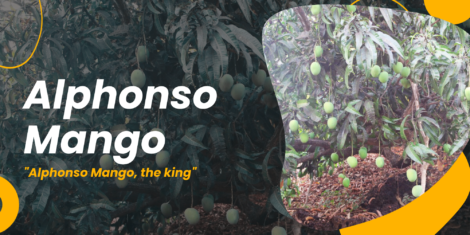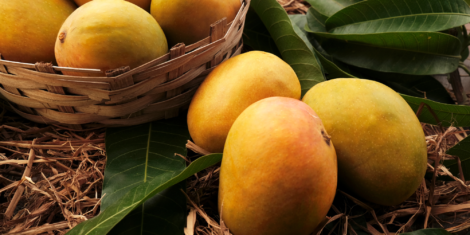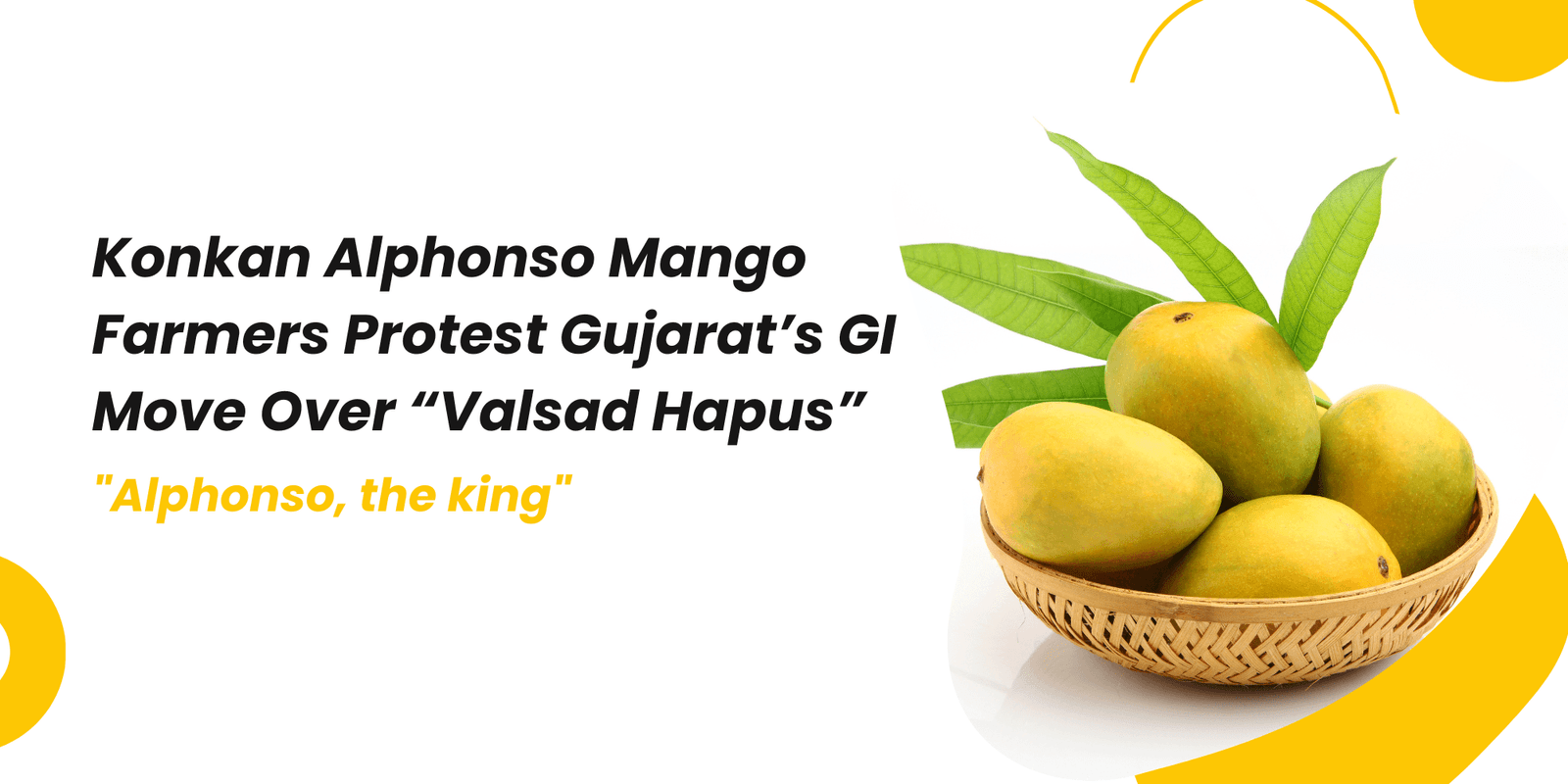
A fresh dispute has emerged around India’s most celebrated mango, the Alphonso or Hapus, as farmers from Maharashtra’s Konkan region protest Gujarat’s move to seek a Geographical Indication (GI) tag for Valsad Alphonso, locally referred to as Valsadi Hapus. Growers fear that granting a separate GI tag to Valsad Hapus would dilute the globally recognised identity, premium value, and economic security associated with Konkan Alphonso mangoes.
The issue has sparked protests, political reactions, and renewed debate about how GI protection should balance shared agricultural heritage with regional brand identity.
The controversy began after Gujarat-based institutions, including Navsari Agricultural University and Gandhinagar University, applied for a GI tag for Valsad Hapus.
Konkan Alphonso growers argue that this move threatens the distinct identity of Ratnagiri and Devgad Alphonso mangoes, which already hold GI status. Farmers from Ratnagiri, Sindhudurg, and other Konkan districts have staged protests, stating that the Alphonso mango’s international reputation is closely tied to Maharashtra’s coastal belt.
Grower representatives, including groups led by farmer activist Vivek Bhide, say that allowing another region to market Alphonso mangoes under a GI label could confuse buyers and weaken the premium positioning Konkan farmers have built over decades.
The Alphonso mango from Maharashtra’s Konkan region received its GI tag in 2018 from the Geographical Indications Registry of India.
This recognition officially linked the unique taste, aroma, and texture of Konkan Alphonso mangoes to the region’s:
For Konkan farmers, the GI tag is not symbolic—it directly protects livelihoods by ensuring that only mangoes grown in the notified regions can be sold as GI-certified Alphonso.
Konkan growers fear that granting a GI tag to Valsad Hapus would:
Alphonso mango farming supports a large rural economy in Ratnagiri and Sindhudurg. Farmers argue that even a small loss of brand clarity can have a serious economic impact, especially in export markets where origin authenticity plays a crucial role.
On the other side, Gujarat’s Bharatiya Kisan Sangh (BKS) has supported the GI application for Valsad Hapus.
According to BKS leaders in Gujarat, Alphonso mangoes have been grown across the broader western belt—including parts of Gujarat—for centuries. They argue that the mango variety predates modern state boundaries and represents a shared agricultural heritage rather than an exclusive regional product.
Supporters of the Gujarat application claim that a GI tag for Valsad Hapus would recognise local farmers’ history without necessarily undermining Konkan growers.
The dispute has also taken on political dimensions. Opposition parties in Maharashtra have urged the state government to intervene and protect the existing GI status of Konkan Alphonso mangoes.
Political leaders have warned that any dilution of the Alphonso brand could affect thousands of farmers and exporters, calling on the government to make formal representations to the GI authorities.
A Geographical Indication (GI) tag certifies that a product originates from a specific location and derives its quality or reputation from that region. GI tags:
In global trade, GI tags act as powerful branding tools. Any ambiguity around their scope can weaken consumer confidence.
This dispute highlights a larger challenge in Indian agriculture: how to protect regional brands while acknowledging historical cultivation across regions. As Indian produce gains global visibility, clear and enforceable GI definitions become increasingly important.
Experts suggest that stronger enforcement, clearer labeling rules, and consumer education are essential to prevent confusion and conflict.
The protest by Konkan Alphonso mango farmers against Gujarat’s GI move for Valsad Hapus reflects deep concerns about brand dilution, farmer livelihoods, and market trust. While both regions share a long history of Alphonso cultivation, Konkan growers argue that GI protection must remain tightly defined to preserve the mango’s global reputation.
As authorities review the application, the outcome will likely set an important precedent for how India balances shared agricultural heritage with region-specific identity in GI protection.