Ratnagiri Alphonso, Kesar, and Totapuri Mango Pulp
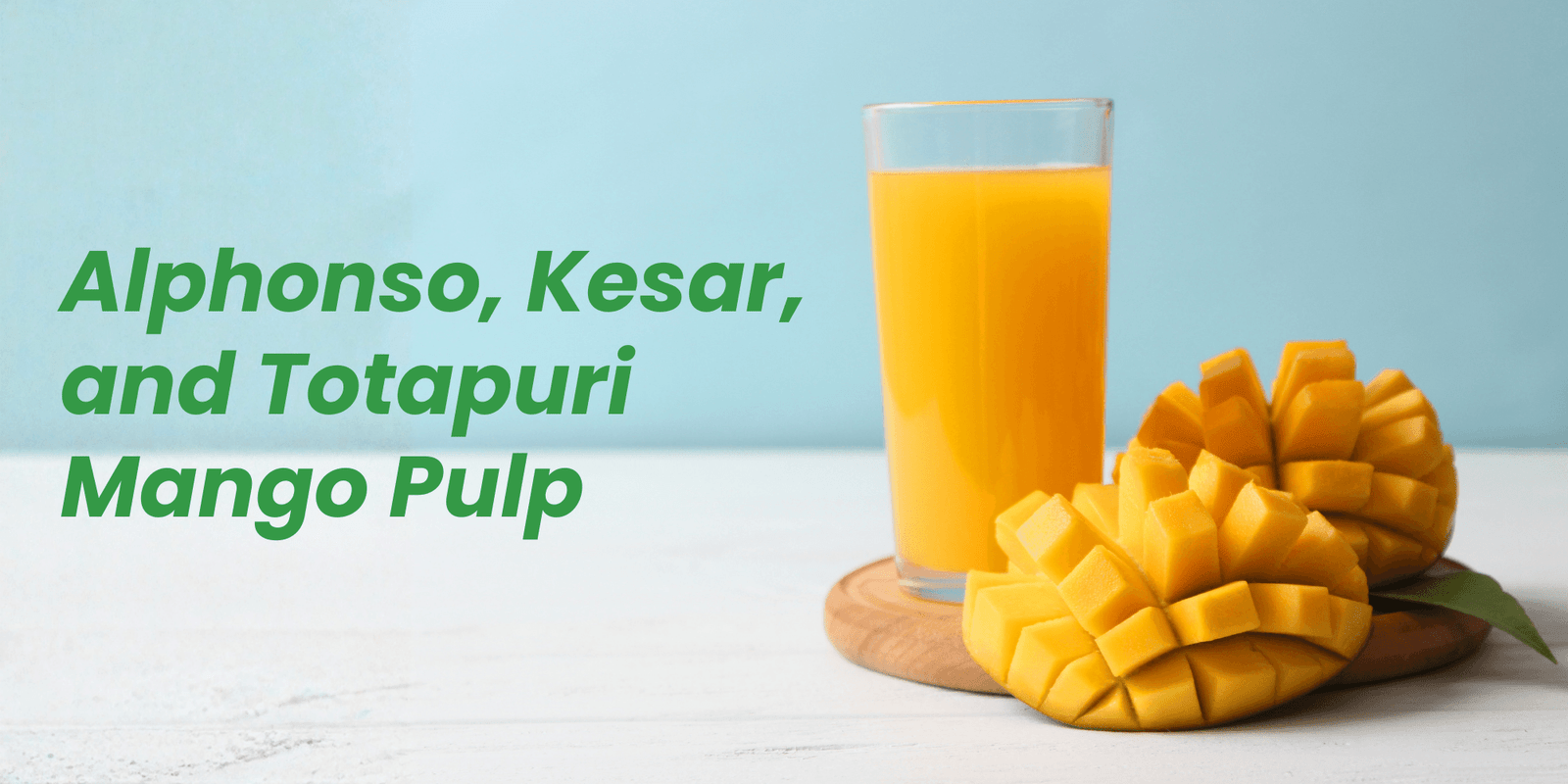
Mango pulp is one of India’s most important fruit-based products, widely used in beverages, dairy products, desserts, bakery items, and export food processing. Among the many mango varieties grown in India, Alphonso, Kesar, and Totapuri dominate the mango pulp industry due to their distinct flavor profiles, processing suitability, and market demand.
This blog explains the key differences between Alphonso, Kesar, and Totapuri mango pulp, their ideal applications, and how to choose the right pulp based on quality, cost, and end use.
Alphonso Mango Pulp
Alphonso mango pulp represents the premium segment of mango processing. It is produced from Alphonso mangoes grown mainly in the Konkan region of Maharashtra, particularly Ratnagiri and Devgad. Known for its superior aroma and smooth texture, Alphonso pulp is preferred where product quality is a priority.
Characteristics of Alphonso Mango Pulp
- Color: Natural golden yellow
- Texture: Extremely smooth and non-fibrous
- Taste: Rich, well-balanced sweetness with mild acidity
- Aroma: Strong, natural, and distinctive
Best Uses of Alphonso Mango Pulp
- Premium ice creams and gelato
- High-end desserts and confectionery
- Bakery fillings and toppings
- Baby food and health-focused products
- Export-grade beverages
Why Alphonso Pulp Is Premium
Alphonso mangoes have limited cultivation areas, lower yield per tree, and strong export demand. Combined with careful hand harvesting and natural ripening, this makes Alphonso pulp costlier but unmatched in flavor and aroma.
Kesar Mango Pulp
Kesar mango pulp is widely used in commercial food production because of its intense sweetness and attractive color. Kesar mangoes are mainly cultivated in Gujarat, particularly in the Junagadh and Talala regions.
Characteristics of Kesar Mango Pulp
- Color: Bright orange
- Texture: Smooth with very fine fiber
- Taste: High natural sweetness
- Aroma: Mild and pleasant
Best Uses of Kesar Mango Pulp
- Mango beverages and milkshakes
- Ice creams, kulfi, and frozen desserts
- Yogurt and flavored dairy products
- Bakery creams and fillings
- Large-scale food processing
Why Kesar Pulp Is Popular
Kesar mango pulp offers higher sweetness and better pulp recovery than Alphonso, making it more cost-effective for bulk use while still delivering good taste and color consistency.
Totapuri Mango Pulp
Totapuri mango pulp is the most commonly used pulp in industrial and export processing. Totapuri mangoes are grown extensively in South India, including Karnataka, Andhra Pradesh, and Tamil Nadu.
Characteristics of Totapuri Mango Pulp
- Color: Light yellow
- Texture: Thick with slight fiber
- Taste: Mild, tangy, low sweetness
- Aroma: Neutral
Best Uses of Totapuri Mango Pulp
- Mango nectar and juice blends
- Sauces, ketchups, and chutneys
- Dairy blends with added sugar
- Bakery and confectionery bases
- Export pulp for further processing
Why Totapuri Dominates Industrial Use
Totapuri mangoes offer high pulp yield, stable pricing, and consistent supply, making them ideal for large-volume production where sweetness and flavor are adjusted during formulation.
Alphonso vs Kesar vs Totapuri Mango Pulp
| Parameter | Alphonso | Kesar | Totapuri |
|---|---|---|---|
| Sweetness | Medium to high | High | Low |
| Aroma | Very strong | Moderate | Mild |
| Texture | Ultra smooth | Smooth | Slightly fibrous |
| Color | Golden yellow | Bright orange | Pale yellow |
| Cost | Highest | Medium | Lowest |
| Best For | Premium products | Commercial sweets | Industrial processing |
How to Choose the Right Mango Pulp
Choose Alphonso mango pulp if:
- Your product targets premium customers
- Aroma and authentic mango flavor are critical
- You need export-quality pulp
Choose Kesar mango pulp if:
- High sweetness and bright color are required
- You produce beverages or desserts at scale
- Cost-to-quality balance is important
Choose Totapuri mango pulp if:
- You need bulk quantities
- Sugar or flavors are added during processing
- Cost efficiency and consistency matter most
Quality Checks Before Buying Mango Pulp
Regardless of the mango variety, always check:
- Brix value (sweetness level)
- Natural color (no artificial coloring)
- Absence of synthetic flavors
- Aseptic or properly canned packaging
- Batch traceability and food safety certifications
Conclusion
Alphonso, Kesar, and Totapuri mango pulps each serve a distinct role in the food processing industry. Alphonso pulp leads in aroma and premium appeal, Kesar pulp balances sweetness and commercial viability, and Totapuri pulp supports large-scale industrial applications.
Understanding these differences ensures the right choice for taste, cost efficiency, and product consistency.
At Ratnagiri Hapus Store, mango pulp is sourced responsibly and processed under strict quality standards to preserve natural flavor and freshness.