Posted on — Leave a comment

The Best Methods for Ripening Mangoes Naturally and Quickly

Mangoes are a delicious and popular fruit, but sometimes they can be hard and unripe when you buy them. If you want to enjoy ripe and juicy mangoes as soon as possible, there are natural methods to speed up the ripening process. In this blog post, we will discuss five methods to Ripen Mango faster at home.

  1. Paper Bag Method

The paper bag method is one of the most popular ways to ripen mango at home. Here are the steps to follow:

  1. Put the mangoes in a paper bag and fold the top of the bag to close it.
  2. Keep the bag in a warm place such as a sunny windowsill or near a fruit bowl.
  3. Check the mangoes daily to see if they have ripened.

The mangoes will release ethylene gas which will help to ripen them faster. This method can take anywhere from two to five days, depending on how ripe the mangoes were when you started.

  1. Rice Method

The rice method is another effective way to ripen mango faster. Here are the steps to follow:

  1. Take a container and fill it with uncooked rice.
  2. Place the mangoes on top of the rice and cover the container with a lid.
  3. Keep the container in a warm place.
  4. Check the mangoes daily to see if they have ripened.

The rice will absorb moisture from the mangoes, speeding up the ripening process. This method can take anywhere from two to five days.

  1. Banana Method

The banana method is a simple and effective way to ripen mango faster. Here are the steps to follow:

  1. Place a ripe banana in a paper bag with the mangoes.
  2. Fold the top of the bag to close it.
  3. Keep the bag in a warm place.
  4. Check the mangoes daily to see if they have ripened.

The banana will release ethylene gas which will help to ripen the mangoes faster. This method can take anywhere from two to five days.

  1. Oven Method

The oven method is a quick way to ripen mangoes, but it requires careful monitoring. Here are the steps to follow:

  1. Preheat your oven to 150 degrees Fahrenheit.
  2. Place the mangoes on a baking sheet and put them in the oven for 15-20 minutes.
  3. Check the mangoes every five minutes until they are soft and ripe.

This method is faster than the other methods, but it requires constant monitoring to prevent the mangoes from over-ripening.

  1. Newspaper Method

The newspaper method is a traditional way to ripen mangoes that has been used for generations. Here are the steps to follow:

  1. Wrap each mango individually in newspaper.
  2. Place the mangoes in a warm place.
  3. Check the mangoes daily to see if they have ripened.

The newspaper will help to absorb moisture from the mangoes, speeding up the ripening process. This method can take anywhere from three to seven days.

Conclusion

Now that you know how to ripen mangoes faster and naturally at home, you can enjoy ripe and juicy mangoes whenever you want. These methods are easy to follow and use natural ingredients that are safe and effective. Try these methods the next time you buy unripe mangoes and enjoy ripe and delicious fruit in no time!

Posted on — Leave a comment

The Perfect Alphonso Mango Gift for Any Occasion

Perfect Alphonso Mango Gift

Are you tired of giving the same old boring gifts for birthdays, holidays, and special occasions? Why not switch things up and give the Alphonso Mango gift? This tropical fruit is not only delicious and nutritious, but it also makes for a unique and thoughtful gift that will leave a lasting impression on your loved ones.

In this article, we’ll explore why Alphonso Mangoes make the perfect gift, where to find the best ones, and how to present them in a way that will wow your friends and family.

Why Alphonso Mango Gift is  Perfect Gift

1. Exotic and Unique

When it comes to gift-giving, you want to give something that stands out from the crowd. Alphonso Mangoes fit the bill perfectly. They are a tropical fruit that is not commonly found in most countries, making them a unique and exotic gift that will impress anyone who receives them.

2. Nutritious and Delicious

Not only are Alphonso Mangoes exotic and unique, but they are also incredibly nutritious and delicious. They are loaded with vitamins and minerals that are essential for good health, and their sweet and juicy flavor is sure to please even the pickiest of eaters.

3. Versatile

Alphonso Mangoes are incredibly versatile and can be used in a variety of ways. They can be eaten fresh, used in smoothies and juices, added to salads and desserts, and even used in savory dishes. This versatility makes them a great gift for anyone, whether they are a health nut or a foodie.

4. Long Shelf Life

Unlike many fruits, Alphonso Mangoes have a relatively long shelf life, which makes them the perfect gift to send through the mail. They can be shipped anywhere in the world and will arrive at their destination fresh and ready to eat.

Read More Blogs


Alphonso Mango Gift
Posted on — Leave a comment

A Sweet Journey: Discovering Where Alphonso Mangoes Are Grown​

Introduction

Mangoes are one of the most beloved fruits in the world. Sweet, juicy, and succulent, mangoes come in many different varieties, each with its own unique flavor and texture. However, few mangoes are as highly regarded as the Alphonso mango. Known for its vibrant color, rich flavor, and luscious texture, the Alphonso mango is considered by many to be the king of mangoes. But where are Alphonso mangoes grown? In this article, we’ll take a sweet journey to discover the origins of this delicious fruit and explore the regions where it is grown.

The Origins of Alphonso Mangoes

Alphonso mangoes are named after Afonso de Albuquerque, a Portuguese general and governor who established the Portuguese colony of Goa in India. It is believed that the mango was first grown in the region of Ratnagiri in the state of Maharashtra in western India. Today, Ratnagiri is still considered to be the heartland of Alphonso mango, and the fruit is grown extensively in the surrounding regions of Konkan, Devgad, and Sindhudurg.

Where Are Alphonso Mango Grown?

Alphonso mangoes are primarily grown in India, with the majority of the fruit coming from the western states of Maharashtra, Gujarat, and Karnataka. Within these states, the mangoes are grown in specific regions that are known for their ideal climatic and soil conditions. These regions include:

  • Ratnagiri and Sindhudurg in Maharashtra
  • Valsad and Navsari in Gujarat
  • Kolar and Chikkaballapur in Karnataka

In addition to these regions, Alphonso mango is also grown in smaller quantities in other parts of India, including Tamil Nadu, Andhra Pradesh, and Kerala.

What Makes Alphonso Mango Special?

Alphonso mango is renowned for their unique flavor, texture, and aroma. Here are a few factors that contribute to the fruit’s exceptional qualities:

  • Rich Flavor: Alphonso mango have a sweet, rich, and intense flavor that is unlike any other mango. The fruit has a perfect balance of sweetness and acidity, with notes of honey, peach, and apricot.
  • Luscious Texture: Alphonso mango are incredibly juicy and have a silky-smooth texture that melts in your mouth. The flesh is tender and buttery, with no fibrous strands.
  • Aroma: Alphonso mango have a distinct, intoxicating aroma that is both sweet and floral.


Posted on — Leave a comment

Ratnagiri Hapus Store started Alphonso Mango pre-orders for season 2023

Pre Order

Ratnagiri Hapus Store, a popular mango store in Maharashtra, India. Has already started taking Alphonso Mango pre-orders for the upcoming 2023 season. This may seem like a strange move, but it is not uncommon for mango aficionados. Who want to get their hands on the best quality fruit to plan ahead.

Alphonso mangoes, also known as Hapus in the local language, are a special variety that is grown mainly in the Ratnagiri and Devgad districts of Maharashtra. They are famous for their sweet, juicy pulp, rich aroma, and bright yellow-orange color. These mangoes have a short season, typically from March to May, and are in high demand across the country.

Ratnagiri Hapus Store has been in the business of selling and now started Alphonso mango pre-orders. Over last years and has a loyal customer base that eagerly awaits the start of each season. The store sources its mangoes directly from the farmers and ensures that they are of the highest quality. The pre-ordering system allows customers to reserve their mangoes in advance, ensuring that they get the first pick of the crop. According to the store’s website, the pre-ordering process involves placing a minimum order of mangoes.

While pre-ordering may seem like an extreme measure, it is due to the love that people have for Alphonso mangoes. For those who have never tasted this delicious fruit, it may be hard to understand why people are willing to plan two years in advance. But for those who have experienced the unique flavor and aroma of Hapus, it is a no-brainer. And for the Ratnagiri Hapus Store, it is a smart business move that ensures their customers are happy and satisfied.

Pre Order
Posted on — Leave a comment

Price of Alphonso Mangoes in Mumbai market: Hapus of Konkan arrived a month ago

Price of Alphonso Mango

Pramod Patil (Mumbai) February 15: Mango, which is known as the king of fruits, is now slowly entering the market. Compared to last year, it is being said that 1 woman has come early this year. Meanwhile, it was informed that as many as 479 boxes of Hapus were received in Mumbai Agricultural Produce Market Committee. which is the capital of the state. Since this is the first time that there has been such an influx in February. There has been an atmosphere of excitement as the bazaars are filled with ambyans. In the wholesale market, it was informed that the price of Alphonso Mangoes 4 to 7 dozen boxes is 3500 to 8000 rupees.

Price of Alphonso Mango


In the APMC market in Mumbai, the arrival of mangoes has increased, and in the last two days, nearly a thousand boxes have entered the market. Mangoes were seen to be affected due to severe cold weather. But now as the cold has subsided to some extent. Mangoes have started coming in the market. The market committee management informed that the same income will be doubled from next month.

Kindly check the blog price of Alphonso mangoes on the websit.

Posted on — Leave a comment

Mango Farming and Production In Ratnagiri & Devgad

Mango Farming

Mango farming and production is a major agricultural industry in many countries around the world, particularly in tropical and subtropical regions.

Where the fruit can grow and thrive. Mangoes are one of the most widely cultivated fruits in the world and are an important source of food and income for millions of farmers and their families.

The mango tree is native to South Asia and has been cultivated for thousands of years. Today, mangoes are grown in many countries around the world, including India, China, the Philippines, Brazil, Mexico, and Egypt. Each country has its own unique varieties of mangoes, and some are considered to be the best in the world. In order to grow mangoes, farmers must have a suitable climate, good soil, and access to water. Mango trees need a lot of sun and warm temperatures to grow, so they are typically found in regions near the equator. The trees can grow to be very tall, and they need plenty of room to spread out their branches.

In order to successfully grow fruit-bearing trees, farmers must regularly prune them to promote healthy growth. It is also necessary to protect mango trees from pests and diseases in mango farming. A combination of chemical and organic methods is usually used by farmers to deal with these problems. Using pesticides and natural predators to control pests.

Harvesting mangoes is typically done by hand, and the fruit is carefully picked to avoid damaging the tree or the fruit. After harvesting, the mangoes are sorted and graded, and the best fruit is sold fresh. While the less perfect fruit is often processed into juice, puree, or other products.

Around the world, the mango industry provides income and employment to millions of people. Mango farming and production are also important to the local economy in many countries, generating income from exports. As well as creating jobs in related industries such as packaging, marketing, and transportation.

In conclusion, mango farming and production is a complex and challenging industry that is essential to the livelihoods of millions of people around the world. Despite the challenges, the industry continues to grow and evolve. With new technologies and methods being developed to improve the quality of the fruit and increase yields for farmers.

Posted on — Leave a comment

Alphonso Mango! Alibaug had the honor of sending the first mango to Mumbai

Alphonso Mango News

This Alphonso mango has been sent to the Vashi market of the Mumbai Agricultural Produce Market Committee.

Mumbai – First in Mumbai market from Raigad district this season. Alibaug taluk has got the honor of sending. Gardener S. from Narangi in Alibaug taluk. K. Varun Sanjay Kumar Patil, the owner of Mangoes, harvested a total of 12 boxes of 7 boxes of Hapus and 5 boxes of saffron of two dozen each on February 1. Sent to Mumbai market.

It seems that nature has once again done the mango growers a disservice this year. Mango crops are being affected by a constantly changing climate. Varun Sanjay Kumar Patil has successfully harvested mangoes and sent the first mango. From the Raigad district to the market after overcoming adverse conditions such as prolonged rains, bad weather, and crop diseases. This Alphonso mango has been sent to the Vashi market of the Mumbai Agricultural Produce Market Committee. District Superintendent Agriculture Officer Ujwala Bankkhele congratulated Varun and wished him good luck for the next season.

Posted on — Leave a comment

Alphonso Mango blog

Alphonso Mango Blog

This blog is related to Alphonso mango, we hope you will like it and please do like share and subscribe to our newsletter so we can write such blogs and bring more information related to alphonso mango to you guys…enjoy reading……The mango is a tropical stone fruit. This is a type of plant food with a fleshy outer section that surrounds a shell, or pit. This pit contains a seed. There are many different kinds of mango.

Alphonso Mango

Indian Hapus (Alphonso) came into existence as a gift from a Portuguese general and military expert- Afonso de Albuquerque. When the Portuguese people colonized India, they carried Mango fruit along. Portuguese was responsible for introducing grafting on mango trees to produce extraordinary and incredible varieties like the Alphonso during the visit to India. That’s how they introduced us to the Hapus mango, which is an outcome of a hybrid plant. It was the Portuguese who introduced grafting on mango trees to produce extraordinary varieties like Alphonso

Alphonso mango is the best variety of mangoes in India. It is mainly found in Ratnagiri of Karnataka, Ratnagiri is home to the alphonso mango. there are several different varieties of Alphonso. Most of the two common Hapus Mangoes are Devgad hapus (Alphonso Mango)and Ratnagiri hapus (Alphonso Mango). These mango varieties are the most expensive but one of the best in terms of sweetness, richness, and flavour.

Ratnagiri Alphonso Mango

Mangoes from Ratnagiri are commonly known as Ratnagiri Hapus. Mangoes from the Coastal area of Ratnagiri with Golden yellow tint & red tinge, nonfibrous juicy pulp.

Alphonso mangoes offer excellent flavour, high freshness, and a yummy taste that is mouth-watering. There is no use of pesticides, insecticides, pre-fulling, and ripening treatment for these mangoes. There is no application of culture and ethylene gas. The peeling of Alphonso is very easy and can be easily peeled just like a banana. Unlike other breeds of mangoes, Alphonso Mangoes does not have any fibre contents.

Buy Ratnagiri alphonso mango online

Seasons in India begin at the end of March and last until it becomes rainy during the monsoon season near the first week of June or May’s end. We source Ratnagiri Hapus directly from our selected GI-certified group of farmers in Ratnagiri district, Maharashtra. Our farmers, who are well trained, follow standard operating procedures on our farms. Which are sourced from Carbide and chemical-free now buy Ratnagiri Alphonso Mangoes online.

How to Cut Ratnagiri Alphonso Mango

Devgad Alphonso Mango

Devgad Alphonso Mango cultivar is located near the Arabian Sea coast guarding mountains rich with minerals, Laterite stones, and fresh sea breeze flowing from the Arabian Sea. It is filled with multiple minerals in the land with a hilly tropical area on one side and the Sea. Mango is grown in Devgad with Saffron & Yellow colour gradients, sweet & fascinating taste Devgad Hapus has a Stronger and thicker outer coat. Devgad Hapus has a Pleasant fruity smell and have no fibre present. It has a very sweet taste and is very popular among people. Having wrinkles or the mango shrivelling when ripe doesn’t take anything away from its incredible taste.

Alphonso mango blog

Buy Devgad alphonso mango online

Seasons in India begin at the end of March and last until it becomes rainy during the monsoon season near the first week of June or May’s end. We source Devgad Alphonso Mango directly from our selected GI-certified group of farmers in the Debvgad district, Maharashtra. Our farmers, who are well trained, follow standard operating procedures on our farms. Which are sourced from Carbide and chemical-free now buy Devgad Alphonso Mangoes online.

How to Cut Devgad Alphonso Mango

Hapus Mango (Hapus Aam)

This fruit is usually referred to as Hapus, which means Alphonso Mango. The mango was selected as the world’s most expensive and best mango in the world. The variety is named after Afonso de Albuquerque, the viceroy of Portuguese India. The Alphonso is a seasonal fruit, available from mid-April through the end of June.

Grown only by farmers from Devgad (Inclusive of Sindhudurga), Ratnagiri, Alibaug, Thane & Palghar district Hapus mangoes can be synonymous with Alphonso Mango. Other area mangoes cannot title this Mango as Hapus or Alphonso Mango. For example, Karnataka and Gujarat farmers grown mangoes will not be called Hapus or Alphonso Mangoes.

Alphonso mango blog

Alphonso Mango GI Tag

The Alphonso Mango from Ratnagiri, Sindhudurg, and other Maharashtra districts has been given a Geographical Indication (GI) tag, which will help consumers recognise the fruit’s authenticity. we deal in the best Alphonso Mangoes around the world who are GI tag certified; this gives you their origin guarantee.

Alphonso mango blog

Why Alphonso Mango is costly?

Alphonso Mango Price

Throughout the world, Devgad Alphonso Mango is well recognized due to its unique taste, aroma, and superior quality. The size of these mangoes is about 4-6 inches and is even in shape. Its skin is inedible, and the colour of ripened Alphonso mangoes is golden yellow. Due to its short season, people are willing to take the opportunity of best taste even at a high price. The price of Alphonso mango is at least 20% more compared to the other mango varieties. Its taste and characteristics are completely worth its high price. The pulp of Alphonso mango is much more delicious, and its skin is thin but firm. Its seed is also smaller as compared to the other mango cultivars, so there is more pulp to enjoy the great taste.

In the Ratnagiri area, these mangoes are harvested by hand, so there is no risk of fruit injuries and people can enjoy the original taste. Mostly, the authorities are exporting the hand-harvested mangoes, so their price is high as compared to the mechanically harvested mangoes. Alphonso mangoes offer excellent flavour, high freshness, and a yummy taste that is mouth-watering. There is no use of pesticides, insecticides, pre-fulling, and ripening treatment for these mangoes. There is no application of culture and ethylene gas. The peeling of Alphonso is very easy and can be easily peeled just like a banana. Unlike other breeds of mangoes, Alphonso Mangoes does not have any fibre contents

Alphonso mango blog

Why Alphonso Mango is the King of Mangoes

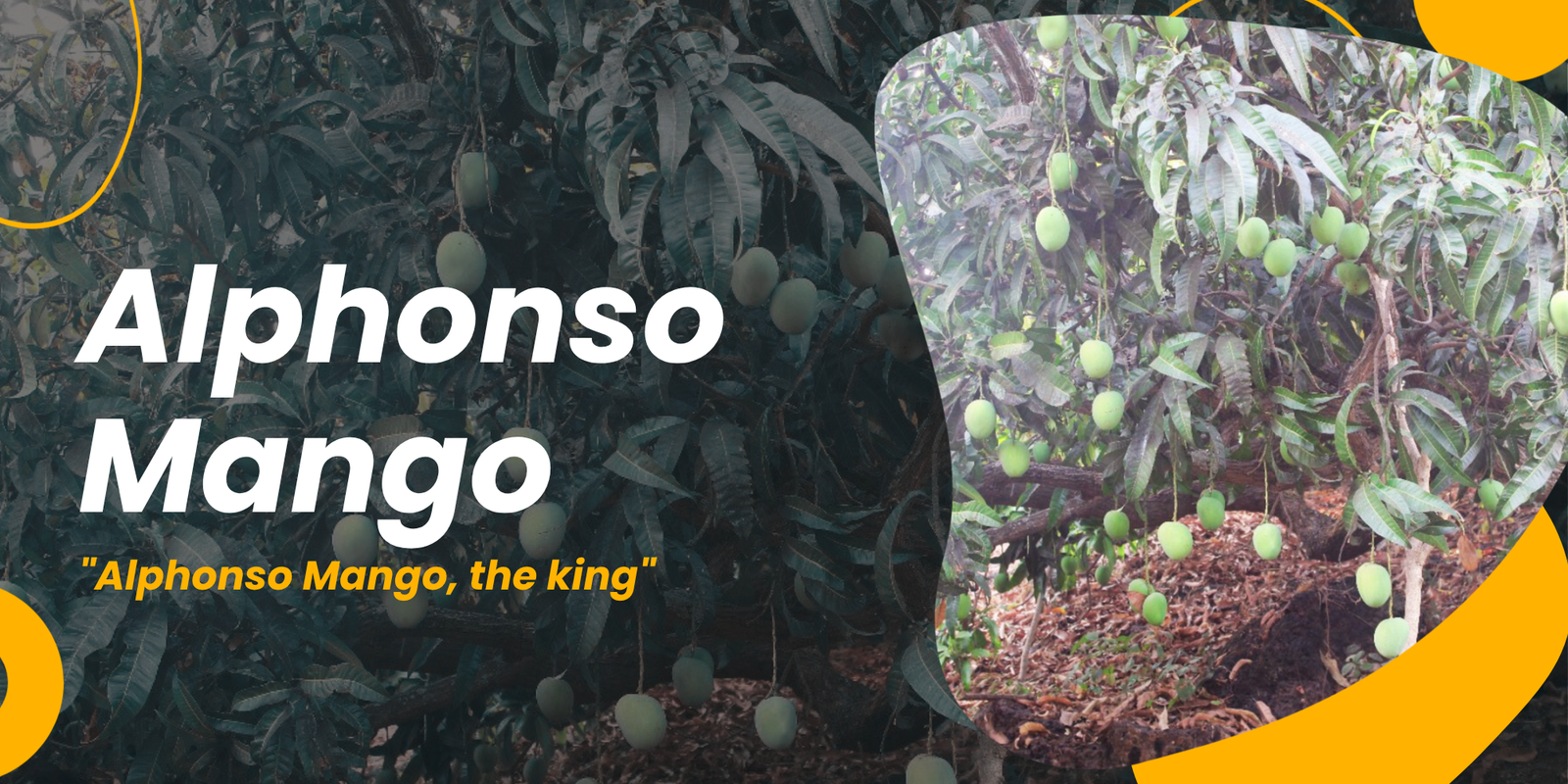
Alphonso mango

Well, when it comes to the reasons that made Alphonso, the king of mangoes, there are some specific reasons. The qualities that an alphonso mango possesses are quite unique and good. So, let’s see …

the cult flavour and the beautiful colour, which makes it different from others. When they ripe the outer layer of these mangoes is turned into a bright yellow with an orange tint, just like a sunrise in the morning from the top. The fruits generally weigh between 150 and 300 and have a rich, creamy, tender texture and delicate, non-fibrous, juicy pulp.

The Alphonso mangoes are known for their intense aroma. Alphonso mangoes possess this characteristic due to high levels of myrcene, a terpenoid, naturally occurring chemical found in plants responsible for the flavour and aroma.  Even a single Alphonso mango will fill the room with its fragrance, making it the King of Mangoes.

They have a finger-licking taste that no one can get over. Not only its taste is wonderful, but also its aroma and the benefits that this particular variety of mango can provide. Also, you may know that Hapus mangoes have also got a Geographical Indication tag which is indeed a great deal for the country

Alphonso mango offers you many health-related benefits, and its taste as compared to other mangoes is unique and different; thus, you can say that these mangoes are the “King of Mangoes”.

Mangoes from India

Varieties of Mangoes in India and Where to Find Them.

Conclusion:

Best Mangoes in the World

There is no doubt, that Devgad Alphonso Mango, Ratnagiri Alphonso Mango or Hapus Aam cultivars are the best mangoes in the world. They are most tasty, pulpy, and sweet than any other kind of mango. Their strong aroma is much more appealing, but their availability is limited to only mid-April through the end of June. So, there is no reason to miss this option of enjoying the greatest taste, even at a higher price.

References:

Wikipedia, mangoes- alphonso mango

Wikipedia, about the fruit mango

mango basket, difference Ratnagiri & Devgad Alphonso Mango

holidify, varieties of Mangoes

Devgad, conclusion

alphonso mango, Ratnagiri, Devgad, Hapus alphonso mango

medical news today, what to know about mangoes

Posted on — Leave a comment

What to Know about Mangoes & Ratnagiri & Devgad Hapus Mango

Mangoes

This blog is intended to know you What to Know about Mangoes. This is a type of plant food with a fleshy outer section that surrounds a shell, or pit. This pit contains a seed. There are many different kinds of mango. They vary in colour, shape, flavour, and seed size. Although mango skin can be green, red, yellow, or orange, its inner flesh is mostly golden yellow. It is part of culture, festivals, language, civilizations, and diplomacy. It’s called as king of all fruits.

The Mango is said to have its origin in Asia (Southern India, 5000 years ago) and is now cultivated all over the world. The word mango is derived from “manke” a Tamil word. Portuguesa merchants were the first to use the word “manga”. In the 15 th and 16 th centuries, British merchants change the term manga into “mango”. Mango is the national fruit of India, Pakistan and the Philippines, while the mango tree is the national tree of Bangladesh.

What to Know about Mangoes

What to Know about Mangoes

Depending on the tree species, mango trees can reach 30–40 m (98–131 feet) tall and have a crown radius of 10–15 m (33–49 feet). Some specimens of these trees are still fruiting after 300 years, indicating that the trees have a long lifespan. A simple leaf can be as long as 30 cm (12 inches) and is lanceolate in shape. Small, pinkish, and fragrant flowers appear in large terminal panicles. There are some flowers with both stamens and pistils, and others have only stamens.

There is a great deal of variation in the shape and size of the fruit. It can appear oval, round, heart-shaped, kidney-shaped, or long and slender. Some mangoes weigh 1.8 to 2.3 kg (4 to 5 pounds), while others are no larger than plums. Some varieties are vividly coloured with shades of red and yellow, while others are dull green. The single large seed is flattened, and the flesh that surrounds it is yellow to orange in colour, juicy, and of distinctive sweet-spicy flavour.

What to Know about Mangoes

Origin

The most seasoned mango tree is found in Khandish of Central India, which is 300 years of age yet bear natural products”. It was ordinarily filled in the East Indies before the earliest visits of the Portuguese who obviously acquainted it with West Africa right off the bat in the sixteenth 100 years and furthermore to Brazil. In the wake of becoming laid out in Brazil, the mango was conveyed toward the West Indies, being first established in Barbados in around 1742 and later in the Dominican Republic. It arrived at Jamaica in around 1782 and, right off the bat in the nineteenth Hundred years, arrived at Mexico from the Philippines and the West Indies.

In 1885, seeds of the fantastic ‘Bombay’ mango of India were brought from Key West to Miami and bringing about two trees that thrived until 1909.

New Delhi hosted the Worldwide Society for Plant Science’s Global Conference on Mango and Mango Culture. India, in 1969 with the end goal of gathering an assortment of germplasm from around the world and empowering helpful examination on rootstocks and bearing way of behaving, hybridization, illness, stockpiling and transport issues, and different areas of study.

What to Know about Mangoes

Varieties of mango

Alphonso Mangoes – Ratnagiri, Maharashtra

Kesar Mangoes – Junagadh, Gujarat

Dasheri Mangoes – Lucknow and Malihabad, Uttar Pradesh

Himsagar and Kishan Bhog Mangoes – Murshidabad, West Bengal etc…

Mango Tree, Fruit, Nutrients, Minerals, and Benefits

“This traditional style is no more with us. Poor or rich families must exchange their first fruit (mangoes) according to their means from the markets”.

“The mango tree is Holy Tree to Buddhism”.

A famous Muslim poet Mirza Ghalib was fond of mangoes.   There was once a conversation between him and a friend “Mirza“, who dislikes mangoes.  .

The summer season in Pakistan is the season of the first fruit (mango). Pakistan grows a wide variety of mangoes. It is the sixth-largest producer of mangoes in the world. There are many ways to consume mangoes in Pakistan, including directly, in salads, in desserts, in pickles, smoothies, milkshakes, or even mango lassi.

The varieties of mangoes produced in Pakistan are popular all over the world. The most popular varieties of mangoes found in Pakistan are:

Tropical regions can easily grow mango trees in their foot gardens. This is because the soil is not the most important factor for its growth, an ideal climate is necessary for its growth.

Conclusion

Mangoes make for one of the most popular fruits across the world. In addition to being sumptuous, pulpy and amazing, mangoes pack a host of health benefits too! Mangoes are eaten worldwide during the summer season and are used in various ways, such as drinks, ice creams, yoghurts, and cake puddings.

This article concludes that the Alphonso mango offers you many health-related benefits, and its taste as compared to other mangoes is unique and different; thus, you can say that these mangoes are the “king of mangoes”

How to plant a Mango Seed?

References:

  1. Wikipedia, about the fruit mango
  2. national library of medicine, mango breeding
  3. bdnews24.com, mango tree, the national tree
  4. medical news today, what to know about mangoes
  5. Britannica, mango plant, fruit
  6. howstuffworks, mango seed plant
  7. etymonline.com, mango
  8. scientificasif, nutrition, benefit, sciencedirect
  9. holidify, mango varieties
  10. food.ndtv, mango benefits
  11. mangobasket, king of fruits, conclusion

Posted on — Leave a comment

Ratnagiri Hapus and Devgad Hapus

Ratnagiri Hapus and Devgad Hapus

Alphonso mango, fondly known as “Hapus” in Marathi, is a seasonal delight and one of India’s most cherished fruits. Its rich sweetness, silky texture, and unparalleled flavor have made it the undisputed “King of Mangoes.” Among Alphonso varieties, Ratnagiri Hapus and Devgad Hapus stand out as two iconic names. But are they truly different? Let’s explore their unique attributes and shared greatness.

Why Alphonso Mango is Special

India’s summer is synonymous with mangoes, and no variety captures the nation’s love like Alphonso. With its radiant golden-yellow skin and buttery, aromatic flesh, Alphonso offers an irresistible experience. The fruit’s flavor is a complex blend of apricot, peach, and honey, with hints of citrus and melon, making every bite a celebration.

Among its cultivars, Ratnagiri Hapus and Devgad Hapus are prominent due to their premium quality and distinct growing conditions in Maharashtra’s coastal belt.

Ratnagiri Hapus: A Coastal Treasure

The Ratnagiri Hapus mango hails from Ratnagiri, a district covering over 8,000 square kilometers. This region’s coastal climate—with its balance of warm sun and cool sea breeze—creates the ideal environment for growing Alphonso mangoes.

Season: Ratnagiri mangoes are typically available from early April to mid-May, marking the beginning of mango season.

Appearance and Taste: Ratnagiri Hapus is smaller with delicate skin that tends to wrinkle when ripe. Its flavor develops early, offering a harmonious mix of sweetness and tang even before full ripening. Its saffron-toned flesh is as smooth as butter, delivering a taste akin to a blend of honey, citrus, and peach.

Cultivation Practices: Ratnagiri farmers rely on organic methods. They use compost made from grass, leaves, and cow dung, ensuring natural growth without chemical interference. This approach enhances the fruit’s flavor while maintaining ecological balance.

Order Now!

Devgad Hapus: The Jewel of Maharashtra

Devgad, a tiny taluka in Maharashtra comprising 98 villages, is another renowned Alphonso-growing region. The mangoes from this area are celebrated for their vibrant color, unique flavor, and export-grade quality.

  • Appearance and Taste: Devgad Hapus is slightly larger with thicker, less wrinkle-prone skin. Its vibrant orange-yellow hue and richer, creamier pulp make it visually striking and delicious. However, the flavor develops fully later in the ripening cycle, so unripe Devgad mangoes may taste sour.
  • Unique Features: This variety is known for its thin skin, which ensures higher pulp yield. Devgad mangoes are also naturally ripened without chemicals, making them healthier and more authentic. The region’s unique soil and microclimate contribute to the mango’s aromatic sweetness.
  • Season: Devgad mangoes arrive later, with their season peaking in mid-May and lasting only a few weeks.
  • Geographical Indication (GI) Tag: Devgad Hapus holds a GI tag, guaranteeing its authenticity and exceptional quality. This hallmark ensures that only mangoes grown in this specific region can carry the name.

How Ratnagiri Hapus and Devgad Hapus Differ

Although both varieties are Alphonso mangoes, slight differences exist due to geographical and climatic conditions.

FeatureRatnagiri HapusDevgad Hapus
SizeSmallerLarger
SkinThin, wrinkles easilyThicker, resists wrinkling
TasteSweet early in ripeningFully sweet when ripened
ColorSaffron-yellowYellow with orange hues
SeasonEarly April to mid-MayMid-May to late May

What Makes Hapus Mangoes Truly Royal

The magic of Hapus lies in its perfect balance of sweetness, acidity, and texture. A fully ripe Hapus mango features golden-yellow skin with an orange tint, yielding aromatic, succulent flesh. Its rich flavor, free of fibers, makes it ideal for fresh consumption or use in desserts.

The shared qualities of Ratnagiri and Devgad Hapus include their organic cultivation, non-fibrous texture, and irresistible taste. Together, they exemplify why Hapus mangoes are considered India’s finest export.

Conclusion: A Celebration of Mango Excellence

While subtle differences exist between Ratnagiri and Devgad Hapus, they are united in their status as the crown jewels of Alphonso mangoes. Whether you prefer the early sweetness of Ratnagiri or the later ripening richness of Devgad, each bite is a tribute to the craftsmanship of Indian farmers and the bounty of nature.

Order your favorite Hapus mangoes today and savor the king of fruits in all its glory!