Posted on Leave a comment

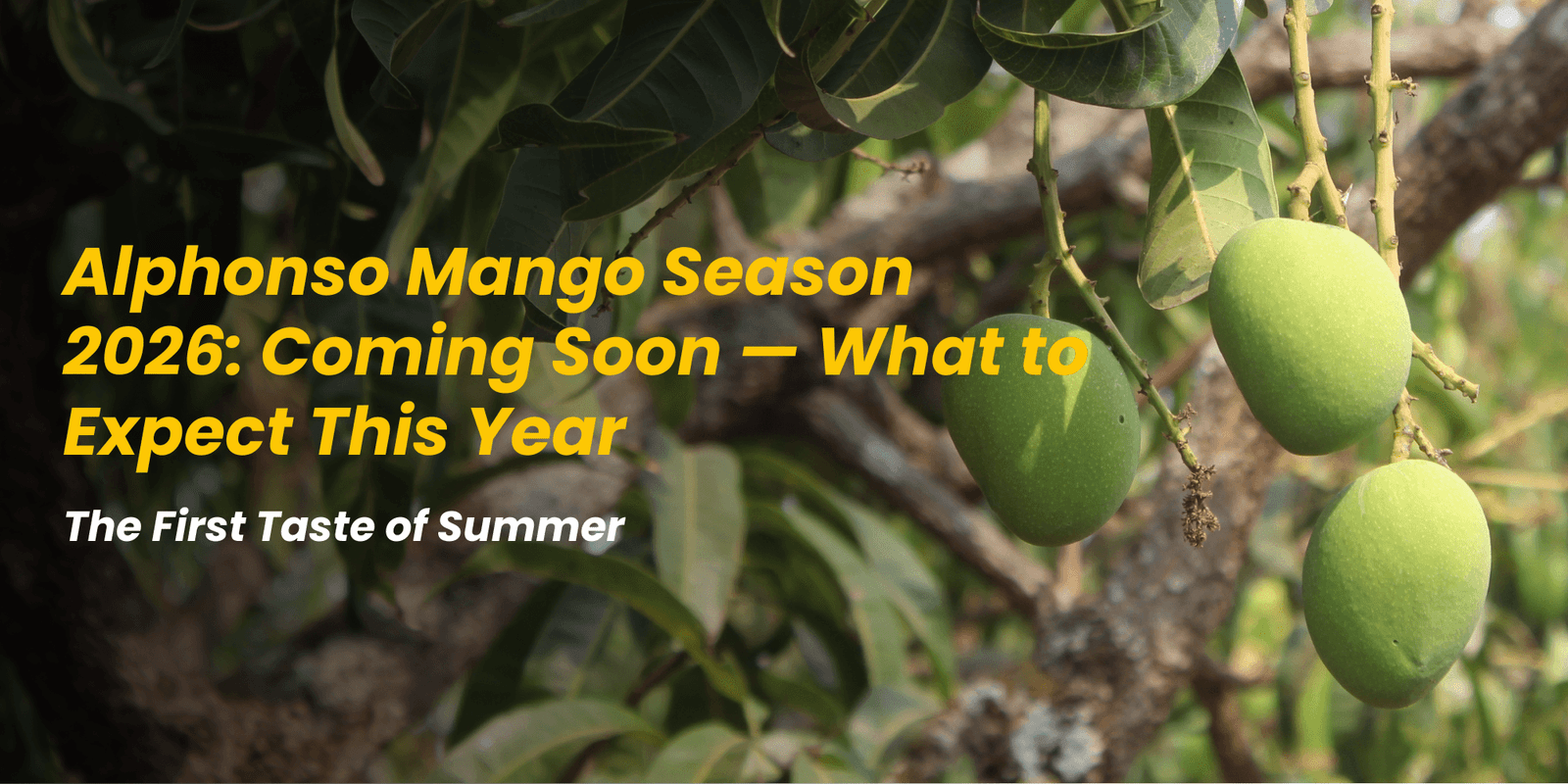
Alphonso Mango Season 2026: Coming Soon — What to Expect This Year

Alphonso Mango Season 2026 Coming Soon — What to Expect This Year

The wait for India’s most loved mango is almost over. The Alphonso mango season 2026 is approaching, and growers, exporters, and mango lovers are once again looking toward the Konkan coast with anticipation. Known for its rich aroma, smooth pulp, and premium status, Alphonso mango—locally called Hapus—remains the highlight of the Indian summer.

As preparations begin in orchards across Ratnagiri and Devgad, here is a clear look at what the 2026 Alphonso mango season is expected to bring.

When Will the Alphonso Mango Season 2026 Start?

The Alphonso mango season typically follows a natural and well-defined cycle.

  • Flowering: December to January
  • Fruit development: February to March
  • Harvest begins: Late March to early April
  • Peak season: April to May
  • Season ends: Early to mid-June

For 2026, early indicators from orchards suggest a timely start, with flowering reported on schedule in several parts of the Konkan region. If weather conditions remain stable, fresh Alphonso mangoes should reach markets by late March or early April.

Growing Conditions and Early Orchard Signals

Alphonso mango quality depends heavily on climate during flowering and fruit-setting stages. Farmers closely monitor temperature, humidity, and rainfall during winter months.

Initial reports from Ratnagiri and Devgad orchards indicate:

  • Healthy flowering in well-managed farms
  • Balanced winter temperatures
  • Improved soil moisture management

These factors point toward good fruit quality, although final yield numbers will depend on weather conditions over the next few months.

Expected Yield and Availability

Alphonso mango production naturally fluctuates year to year due to climate variability. For the 2026 season, growers are cautiously optimistic.

While no record-breaking harvest is expected, farmers anticipate:

  • Moderate to good yields
  • Better size uniformity in premium orchards
  • Strong availability during peak season

As always, early-season and late-season availability will remain limited, with the best balance of quality and pricing expected during April and May.

Pricing Outlook for Alphonso Mangoes in 2026

Prices for Alphonso mangoes depend on supply, demand, and export volumes. Based on early assessments:

  • Early-season mangoes: Higher prices due to limited supply
  • Mid-season mangoes: More stable pricing with better availability
  • Late-season mangoes: Premium pricing returns as supply tapers

GI-certified Alphonso mangoes from Ratnagiri and Devgad are expected to continue commanding premium prices due to strong domestic demand and export interest.

Export Demand and Global Markets

International demand for Alphonso mangoes continues to grow, especially in markets such as:

  • United States
  • United Kingdom
  • Saudi Arabia and the Middle East
  • Singapore and Japan

Exporters are preparing for the 2026 season by aligning with air-cargo schedules, compliance requirements, and buyer commitments. High-quality fruit with proper traceability is expected to remain in strong demand.

Focus on Authenticity and GI Protection

The 2026 season arrives at a time when authenticity and GI protection are under increased focus. Buyers are more aware of origin claims and are actively seeking mangoes labeled clearly as Ratnagiri or Devgad Alphonso.

Farmers and sellers are placing greater emphasis on:

  • Transparent sourcing
  • Natural ripening practices
  • Clear packaging and origin details

This shift benefits genuine growers and helps consumers make informed choices.

Alphonso Mango Products Beyond Fresh Fruit

Alongside fresh mango sales, demand for Alphonso mango pulp and processed products is also expected to rise in 2026. Food processors, exporters, and hospitality businesses are planning procurement early to secure quality raw material during peak season.

However, limited fresh fruit availability means Alphonso pulp will remain a premium product compared to Kesar or Totapuri pulp.

What Consumers Should Know Before the Season Begins

As the Alphonso mango season 2026 approaches, consumers are advised to:

  • Book early with trusted sellers
  • Be cautious of early-season claims before March
  • Check origin details and GI references
  • Expect natural variations in size and color

True Alphonso mangoes are seasonal by nature, and patience often rewards buyers with the best quality fruit.

Conclusion

The Alphonso mango season 2026 is shaping up to be another eagerly awaited chapter for India’s most iconic mango. With healthy orchard signs, steady export demand, and growing consumer awareness, the focus this year will be on quality, authenticity, and traceability.

As summer approaches, Ratnagiri and Devgad once again prepare to deliver the fruit that defines the season. For mango lovers, the message is simple: the wait is almost over—Alphonso mango season 2026 is coming soon.

Posted on Leave a comment

Konkan Alphonso Mango Farmers Protest Gujarat’s GI Move Over “Valsad Hapus”

Konkan Alphonso Mango Farmers Protest Gujarat’s GI Move Over “Valsad Hapus”

A fresh dispute has emerged around India’s most celebrated mango, the Alphonso or Hapus, as farmers from Maharashtra’s Konkan region protest Gujarat’s move to seek a Geographical Indication (GI) tag for Valsad Alphonso, locally referred to as Valsadi Hapus. Growers fear that granting a separate GI tag to Valsad Hapus would dilute the globally recognised identity, premium value, and economic security associated with Konkan Alphonso mangoes.

The issue has sparked protests, political reactions, and renewed debate about how GI protection should balance shared agricultural heritage with regional brand identity.

The Dispute: Why Konkan Farmers Are Protesting

The controversy began after Gujarat-based institutions, including Navsari Agricultural University and Gandhinagar University, applied for a GI tag for Valsad Hapus.

Konkan Alphonso growers argue that this move threatens the distinct identity of Ratnagiri and Devgad Alphonso mangoes, which already hold GI status. Farmers from Ratnagiri, Sindhudurg, and other Konkan districts have staged protests, stating that the Alphonso mango’s international reputation is closely tied to Maharashtra’s coastal belt.

Grower representatives, including groups led by farmer activist Vivek Bhide, say that allowing another region to market Alphonso mangoes under a GI label could confuse buyers and weaken the premium positioning Konkan farmers have built over decades.

Konkan’s Existing GI Tag

The Alphonso mango from Maharashtra’s Konkan region received its GI tag in 2018 from the Geographical Indications Registry of India.

This recognition officially linked the unique taste, aroma, and texture of Konkan Alphonso mangoes to the region’s:

  • Lateritic red soil
  • Coastal climate and sea breeze
  • Traditional cultivation and natural ripening practices

For Konkan farmers, the GI tag is not symbolic—it directly protects livelihoods by ensuring that only mangoes grown in the notified regions can be sold as GI-certified Alphonso.

Farmers’ Concerns: Livelihood and Brand Dilution

Konkan growers fear that granting a GI tag to Valsad Hapus would:

  • Dilute the premium image of Konkan Alphonso mangoes
  • Lower market prices due to brand confusion
  • Harm export credibility in sensitive international markets
  • Reduce long-term income security for thousands of small farmers

Alphonso mango farming supports a large rural economy in Ratnagiri and Sindhudurg. Farmers argue that even a small loss of brand clarity can have a serious economic impact, especially in export markets where origin authenticity plays a crucial role.

Gujarat’s Stance: Shared Heritage Argument

On the other side, Gujarat’s Bharatiya Kisan Sangh (BKS) has supported the GI application for Valsad Hapus.

According to BKS leaders in Gujarat, Alphonso mangoes have been grown across the broader western belt—including parts of Gujarat—for centuries. They argue that the mango variety predates modern state boundaries and represents a shared agricultural heritage rather than an exclusive regional product.

Supporters of the Gujarat application claim that a GI tag for Valsad Hapus would recognise local farmers’ history without necessarily undermining Konkan growers.

Political Reactions in Maharashtra

The dispute has also taken on political dimensions. Opposition parties in Maharashtra have urged the state government to intervene and protect the existing GI status of Konkan Alphonso mangoes.

Political leaders have warned that any dilution of the Alphonso brand could affect thousands of farmers and exporters, calling on the government to make formal representations to the GI authorities.

What Is a GI Tag and Why It Matters

A Geographical Indication (GI) tag certifies that a product originates from a specific location and derives its quality or reputation from that region. GI tags:

  • Protect product names from misuse
  • Support higher prices for farmers
  • Build trust in domestic and global markets
  • Preserve traditional knowledge and practices

In global trade, GI tags act as powerful branding tools. Any ambiguity around their scope can weaken consumer confidence.

The Broader Impact on Indian Agriculture

This dispute highlights a larger challenge in Indian agriculture: how to protect regional brands while acknowledging historical cultivation across regions. As Indian produce gains global visibility, clear and enforceable GI definitions become increasingly important.

Experts suggest that stronger enforcement, clearer labeling rules, and consumer education are essential to prevent confusion and conflict.

Conclusion

The protest by Konkan Alphonso mango farmers against Gujarat’s GI move for Valsad Hapus reflects deep concerns about brand dilution, farmer livelihoods, and market trust. While both regions share a long history of Alphonso cultivation, Konkan growers argue that GI protection must remain tightly defined to preserve the mango’s global reputation.

As authorities review the application, the outcome will likely set an important precedent for how India balances shared agricultural heritage with region-specific identity in GI protection.

Posted on Leave a comment

Large-Scale Mango Air Logistics Expand Exports

Large-Scale Mango Air Logistics Expand Exports

India’s mango export industry has seen a major shift in recent seasons, driven by the rapid expansion of air cargo logistics for fresh mango shipments. For premium varieties like Alphonso mango, faster and more reliable air transport has opened new opportunities in global markets while improving quality assurance for international buyers.

This development marks an important step for India’s horticulture exports, especially for fruits with short shelf life and high quality expectations.

Why Air Logistics Matter for Alphonso Mango Exports

Alphonso mangoes are highly sensitive to time, temperature, and handling. Unlike hardier fruits, they require careful transport to preserve:

  • Natural aroma
  • Pulp texture
  • Ripeness balance
  • Shelf life

Earlier, exporters relied heavily on sea freight, which increased transit time and raised the risk of overripening or quality loss. As a result, air cargo has become the preferred mode for premium Alphonso shipments, particularly to distant markets.

Expansion of Air Cargo Capacity for Mango Exports

During the peak mango season, Indian airlines and cargo operators significantly increased their capacity for transporting mangoes abroad. A key contributor to this effort has been Air India, which carried large volumes of Indian mangoes to multiple international destinations.

By using a combination of dedicated cargo flights and passenger aircraft belly space, exporters managed to:

  • Reduce transit time
  • Maintain cold-chain integrity
  • Reach more destinations efficiently

This expansion allowed mangoes harvested in Ratnagiri and Devgad to reach overseas markets within days instead of weeks.

Key Export Destinations Benefiting from Air Logistics

With improved air connectivity, Alphonso mangoes reached several major markets more efficiently, including:

  • United States
  • United Kingdom
  • United Arab Emirates
  • Singapore
  • Japan

These destinations demand strict compliance with quality and phytosanitary standards. Faster air transport helps exporters meet these requirements while delivering fruit at optimal ripeness.

Impact on Mango Quality and Buyer Confidence

One of the biggest advantages of air logistics is consistent quality on arrival. Shorter transit times reduce temperature fluctuations and handling stress, which directly improves fruit condition.

As a result:

  • Importers receive mangoes with better aroma and appearance
  • Retail shelf life improves
  • Rejection rates decline

This reliability strengthens buyer confidence and encourages repeat orders, especially for GI-certified Alphonso mangoes.

Benefits for Farmers and Exporters

The expansion of air cargo logistics benefits multiple stakeholders across the supply chain.

For Farmers

  • Better price realization for export-grade mangoes
  • Reduced wastage during peak harvest
  • Stronger demand for quality-focused farming

For Exporters

  • Access to premium markets
  • Ability to meet tight delivery windows
  • Improved brand reputation abroad

Moreover, exporters can now plan shipments more accurately, aligning harvest schedules with flight availability.

Challenges and Cost Considerations

Despite its advantages, air freight remains more expensive than sea transport. Exporters must balance:

  • Higher freight costs
  • Price sensitivity in destination markets
  • Limited cargo space during peak travel seasons

Therefore, air logistics are mainly used for high-value Alphonso mangoes, while other varieties may still move via sea routes or mixed logistics models.

Long-Term Outlook for Mango Air Exports

Industry experts believe that air logistics will continue to play a key role in India’s mango export strategy. As demand for premium, traceable produce grows, faster delivery methods will become essential rather than optional.

In the future, improvements in:

  • Cold-chain infrastructure at airports
  • Coordination between farmers and exporters
  • Dedicated seasonal cargo planning

could further reduce costs and expand air-based mango exports.

What This Means for Alphonso Mango Buyers

For international buyers, expanded air logistics mean:

  • Fresher mangoes
  • More reliable supply
  • Better consistency in quality

For domestic consumers, strong export demand reinforces the importance of authentic sourcing and GI protection, ensuring that premium Alphonso mangoes retain their value.

Conclusion

The expansion of large-scale mango air logistics represents a major advancement for India’s fruit export industry. By enabling faster, safer, and more reliable delivery, air cargo has strengthened the global presence of Alphonso mangoes.

As logistics, compliance, and infrastructure continue to improve, Alphonso mango exports are well positioned to grow—supporting farmers, exporters, and India’s reputation as a source of premium agricultural produce.

Posted on Leave a comment

GI Tag Dispute Around the Hapus Variety: Why Origin and Authenticity Matter

GI Tag Dispute Around the “Hapus” Variety: Why Origin and Authenticity Matter

The Alphonso mango, locally called Hapus, holds a special place in India’s agricultural heritage. However, in recent seasons, a growing dispute over the Geographical Indication (GI) tag for “Hapus” has raised serious questions about origin, labeling, and authenticity.

This debate matters not only to farmers, but also to consumers and exporters who rely on trust and transparency when buying Alphonso mangoes.

What Is a GI Tag and Why Is It Important?

A Geographical Indication (GI) tag protects products that come from a specific region and owe their quality to that location. In agriculture, GI tags help farmers protect their reputation and earn fair prices.

In 2018, India granted the GI tag for Alphonso mangoes to Ratnagiri and Devgad in Maharashtra through the Geographical Indications Registry of India.
As a result, only mangoes grown in these regions can legally be sold as Ratnagiri Alphonso or Devgad Alphonso.

This decision recognized that the true Alphonso mango gets its taste, aroma, and texture from:

  • Konkan’s lateritic red soil
  • Coastal humidity and sea breeze
  • Traditional farming and natural ripening

What Is the Current “Hapus” GI Dispute?

Recently, growers from regions outside the Konkan belt have requested permission to use the name “Hapus” for their mangoes. They argue that similar Alphonso-type mangoes grow in their areas.

However, Konkan farmers strongly oppose this move. They clearly state that similar does not mean identical. According to them, mangoes grown outside Ratnagiri and Devgad lack the same flavor depth, aroma, and consistency.

Therefore, expanding the use of the “Hapus” name could weaken the meaning of the GI tag and confuse buyers.

Why Konkan Farmers Are Worried

For Ratnagiri and Devgad farmers, GI protection directly affects income and survival. Authentic Alphonso mangoes sell at a premium because buyers trust their origin.

If authorities allow wider use of the “Hapus” name, farmers fear:

  • Mislabeling in markets and online stores
  • Falling prices for genuine Alphonso mangoes
  • Loss of export credibility
  • Reduced motivation to follow traditional farming methods

As a result, many farmer groups have demanded stricter enforcement of GI rules.

How This Affects Consumers

For consumers, the dispute highlights a simple truth: not every mango sold as Alphonso is genuine.

Without clear origin labels, buyers may unknowingly purchase mangoes grown outside GI regions while paying premium prices. This problem affects:

  • Online shoppers
  • Export buyers
  • Corporate gifting orders

Therefore, buyers should always check packaging details, origin mentions, and seller transparency before purchasing.

The Need for Better Enforcement and Awareness

Although the GI tag exists, enforcement remains uneven. Many sellers still misuse the Alphonso name because penalties are weak and awareness is low.

To solve this, experts suggest:

  • Clear labeling of Ratnagiri or Devgad origin
  • Mandatory GI references on packaging
  • Digital traceability using QR codes
  • Stronger checks in wholesale and export markets

Importantly, informed consumers play a key role in stopping misuse by choosing verified sellers.

Why This Issue Matters Beyond Alphonso Mangoes

The “Hapus” dispute reflects a larger issue in Indian agriculture. As Indian products gain global attention, origin-based branding becomes critical.

Strong GI protection:

  • Rewards honest farmers
  • Builds long-term buyer trust
  • Supports sustainable agriculture

On the other hand, weak protection turns premium products into ordinary commodities.

What Buyers Should Do Now

Until authorities clarify the dispute, buyers should:

  • Prefer sellers who clearly mention Ratnagiri or Devgad
  • Look for GI references or traceability details
  • Avoid vague terms like “Alphonso type” or “Hapus variety”

By doing so, buyers help protect both quality and farmer livelihoods.

Conclusion

The GI tag dispute around the “Hapus” mango shows why origin matters more than ever. Ratnagiri and Devgad Alphonso mangoes earned their reputation through geography, climate, and generations of farming knowledge.

Protecting this identity ensures fairness for farmers and confidence for consumers. In a global market, authenticity is not optional—it is essential.

Posted on Leave a comment

Indian Fruit Wines, Including Alphonso Mango Wine, See Global Demand Rise

Indian Fruit Wines, Including Alphonso Mango Wine, See Global Demand Rise

India’s fruit-based wine industry is witnessing a notable transformation, with Alphonso mango wine emerging as one of the most talked-about products in international markets. Once considered a niche, fruit wines made from Indian-origin fruits such as Alphonso mango, jamun, chikoo, and pineapple are now gaining shelf space in global retail and hospitality channels.

This growing demand reflects changing consumer preferences worldwide, where buyers are increasingly seeking unique flavors, natural ingredients, and region-specific products rather than conventional grape-only wines.

Alphonso Mango: From Fresh Fruit to Premium Wine Ingredient

Alphonso mango has long been prized for its aroma, rich pulp, and balanced sweetness. These same characteristics make it particularly suitable for wine fermentation. Unlike many fruits, Alphonso offers a naturally high sugar content, smooth pulp texture, and a distinctive flavor profile that translates well into wine.

Producers report that Alphonso mango wine delivers:

  • A naturally fruity aroma without artificial flavoring
  • Balanced sweetness and acidity
  • A smooth mouthfeel, appealing to new wine drinkers

As a result, Alphonso mango wine is increasingly positioned as a premium fruit wine, rather than a novelty product.

Rising Global Demand for Indian Fruit Wines

Recent trade data and industry reports indicate that exports of Indian fruit wines have grown significantly year-on-year, with shipments doubling in some international markets. Alphonso mango wine has emerged as a key contributor to this growth.

Key export destinations include:

  • United Kingdom
  • European Union countries
  • Southeast Asia
  • Select Middle Eastern markets (where permitted by regulations)

In these markets, Indian fruit wines are often promoted as exotic, craft-style beverages with a strong origin story, appealing to consumers looking for alternatives to traditional wines.

Why International Markets Are Embracing Alphonso Mango Wine

Several factors are driving global interest in Alphonso mango wine:

1. Demand for Unique and Authentic Flavors

International consumers are increasingly drawn to products that offer a sense of place. Alphonso mango wine benefits from its association with India’s Konkan region, where the fruit’s reputation is already well established.

2. Lower Alcohol, Wider Appeal

Fruit wines generally have a lower alcohol content than traditional grape wines, making them attractive to casual drinkers and younger consumers exploring wine for the first time.

3. Growth of Craft and Boutique Wine Segments

Much like craft beer, the global wine market is seeing growth in small-batch and experimental wines. Alphonso mango wine fits well into this segment, particularly when marketed as a limited seasonal product.

Impact on Mango Growers and the Processing Industry

The rise of Alphonso mango wine is creating new value streams for mango growers and processors. Fruits that may not meet strict fresh-export grade standards—but are still high in pulp quality—can be diverted to wine production.

This has multiple benefits:

  • Reduced wastage during peak harvest
  • Additional income opportunities for farmers
  • Better utilization of Alphonso mango pulp

For processors, mango wine represents a way to extend the commercial life of Alphonso beyond the short fresh-fruit season.

Quality, Compliance, and Export Standards

As demand grows, compliance has become a critical focus area. Export-oriented fruit wine producers are aligning with:

  • Food safety and labeling standards of importing countries
  • Alcohol regulations and certification requirements
  • Traceability of fruit sourcing

Alphonso mango wine producers increasingly highlight the origin of mangoes, processing methods, and batch information to build trust with overseas buyers.

Challenges Ahead

Despite strong momentum, the segment faces challenges:

  • Limited availability of Alphonso mangoes
  • Seasonal dependence on raw material
  • Regulatory complexity in alcohol exports
  • Need for consistent quality across batches

Industry experts note that scaling fruit wine exports will require better coordination between farmers, processors, and logistics providers.

Outlook: Alphonso Mango Wine as a Global Indian Signature

The success of Alphonso mango wine signals a broader shift in how Indian agricultural products are perceived globally. No longer limited to raw exports, India is increasingly exporting value-added, origin-driven products.

As branding, quality control, and export infrastructure improve, Alphonso mango wine has the potential to become a signature Indian fruit wine—much like how certain grape wines are associated with specific regions worldwide.

Conclusion

The growing global demand for Indian fruit wines marks an important milestone for India’s agri-processing sector. Among these, Alphonso mango wine stands out for its flavor, authenticity, and premium appeal.

By combining India’s most iconic mango with modern fermentation and export practices, producers are opening new markets and creating sustainable opportunities for growers. If managed carefully, Alphonso mango wine could play a lasting role in showcasing India’s agricultural excellence on the global stage.

Posted on Leave a comment

Devgad Hapus Arrives Early : A Mango Delight

Devgad Hapus Arrives Early

Every year, the golden glow of Devgad and Ratnagiri Hapus lights up the Indian summer. But this year, that sunshine arrived early — before Diwali.

In a surprising and exciting turn of events, the first crates of Devgad Hapus mangoes were dispatched to the Vashi fruit market even before the festive lights were lit. For mango lovers, it’s like summer knocking on the door in the middle of autumn.

🌞 A Rare Sight: Mangoes Before Winter

Typically, Alphonso mangoes — known locally as Hapus — reach the markets in March or April.
However, this year, favorable weather and careful cultivation allowed a small early harvest from select Devgad orchards in Sindhudurg district.

These mangoes are part of a controlled flowering cycle, a result of scientific pruning and natural temperature changes post-monsoon.
Farmers noticed early bud induction in July–August, leading to flowering by September — nearly three months ahead of schedule.

“This early batch is small but perfectly matured — naturally ripened and chemical-free,” say local orchard owners.

🧺 First Crate to Vashi: A Symbol of Season’s Promise

The first crate’s journey — from the lush orchards of Devgad to the bustling Vashi fruit market — has become symbolic. It marks not just the start of another mango season, but a message of freshness, hard work, and innovation from Konkan’s farmers.

Fruit traders report that the early mangoes fetched premium prices, with buyers eager to savor the first taste of the King of Fruits long before the usual summer rush.

🍃 Nature’s Rhythm and Farmer’s Wisdom

While early harvests generate excitement, farmers in both Devgad and Ratnagiri are careful to balance innovation with nature’s rhythm.
Hapus trees require rest and controlled stress cycles to ensure high-quality flowering and fruiting in the main season (January–May).

The early crop is therefore limited — more of a teaser than a full-fledged harvest.
It reflects how microclimate, timing, and traditional wisdom come together to create India’s most loved fruit.

🥭 What This Means for Mango Lovers

For mango enthusiasts, this early Devgad batch is a reminder of what’s coming:

  • The rich aroma and sweetness unique to Konkan mangoes.
  • The promise of freshness that no other variety can match.
  • And the anticipation of the grand Ratnagiri Hapus season ahead.

So, while the rest of India celebrates Diwali with sweets and lights, the Konkan coast quietly celebrates with the first slice of golden Hapus — a taste of the summer to come.

✨ Looking Ahead: The King Will Return in Full Glory

As winter approaches, the trees in Ratnagiri and Devgad are preparing for their main flowering phase.
By late December, orchards will be covered in panicles — the delicate blossoms that promise the next season’s treasures.

And by April, the markets will be flooded once again with crates of golden Ratnagiri Hapus — fragrant, juicy, and ready to reign.

Posted on Leave a comment

Alphonso Mango Season 2025: Low Yield, High Prices – What Hapus Lovers Can Expect?

Alphonso Mango Season 2025: Low Yield, High Prices – What Customers Can Expect?

The 2025 Alphonso mango season has arrived, but it comes with challenges that have affected both supply and pricing. Compared to previous years, this season has seen a significantly lower yield of premium Ratnagiri Hapus (Alphonso mangoes), leading to higher market rates. Traditionally, major markets like Vashi APMC and Pune receive over one lakh boxes (petis) daily, but this year, the numbers have drastically dropped to just a few thousand. This situation has left traders, farmers, and customers wondering about what’s ahead for the mango season. Hapus Mango Season 2025

Why Is the Yield Low This Year?

One of the primary reasons behind the reduced supply is climate change and unpredictable weather conditions. A sudden rise in temperature during the flowering phase of mango trees caused flower burn, leading to fewer mangoes developing on the trees. The unexpected heatwave hit mango orchards at a crucial stage, affecting the overall production. In previous years, unseasonal rains have been a concern, but this year’s challenge was the sharp temperature fluctuations that damaged a significant portion of the mango crop.

Price Surge: How Much Will Alphonso Mangoes Cost in 2025?

Due to low supply and high demand, the price of Ratnagiri and Devgad Alphonso mangoes has increased sharply. Currently, Alphonso mangoes are being sold at ₹8,000 – ₹10,000 per box in the Vashi market. These rates are significantly higher than last year, when a larger supply helped stabilize prices. With fewer mangoes available, the prices may continue to rise until peak production arrives in mid-April to May.

Customers should expect limited availability of authentic Ratnagiri and Devgad Alphonso mangoes and higher prices compared to previous years. However, as more mangoes reach the market in April, some price corrections might be seen.

What Can Hapus Lovers Expect in 2025?

  1. Limited Availability: Since the yield is lower this year, finding authentic Alphonso mangoes will be more challenging. It’s advisable to pre-order from trusted sellers like Ratnagiri Hapus Store to ensure you get the best-quality mangoes.
  2. Higher Prices: The shortage has already led to higher prices in the wholesale market, and these rates will likely reflect in retail purchases as well.
  3. Peak Season Delays: Usually, April and May are the best months to buy Alphonso mangoes in bulk at stable prices. This year, there might be slight delays in peak supply, pushing prices higher for an extended period.
  4. Quality Concerns: Due to the high demand and low supply, customers might come across low-quality or artificially ripened mangoes in the market. Buying from trusted sellers ensures you get naturally ripened, chemical-free Alphonso mangoes.

How to Get the Best Alphonso Mangoes This Season?

With low supply and high demand, it’s important to make smart buying decisions to enjoy the authentic taste of Alphonso mangoes. Here’s what you can do:

  • Pre-Order Early: Booking your mangoes in advance from trusted online stores will help you secure the best quality at a fair price. Pre-ordering ensures you don’t miss out due to market shortages.
  • Buy from Trusted Sellers: Avoid artificially ripened mangoes by purchasing directly from farmers or reputed sellers. Websites like Ratnagiri Hapus Store offer farm-fresh, naturally ripened Alphonso mangoes delivered to your doorstep.
  • Check for Authenticity: Always verify the origin of the mangoes. Genuine Ratnagiri Alphonso mangoes have a GI (Geographical Indication) tag, ensuring they are from the right region.
  • Choose Chemical-Free Mangoes: Many sellers use artificial ripening techniques that affect taste and quality. Look for mangoes that are ripened naturally using hay or paper.

Looking Ahead: Will the Situation Improve?

The mango season is expected to stabilize by mid-April, with more arrivals helping control the prices. However, given the lower overall yield, it is unlikely that prices will drop significantly. Customers who wait too long might end up paying even higher prices or struggle to find genuine Alphonso mangoes.

This season serves as a reminder of the impact of climate change on agriculture. The challenges Hapus Mango Season 2025 by farmers emphasize the importance of supporting authentic sellers and choosing high-quality, naturally ripened mangoes over chemically treated alternatives.

Hapus Mango Season 2025

Final Thoughts: Should You Buy Alphonso Mangoes in 2025?

If you love the rich taste of authentic Alphonso mangoes, this year’s supply shortage shouldn’t stop you. Pre-ordering is the best way to ensure you get the best mangoes at a fair price. While rates are high, the taste, aroma, and premium quality of real Ratnagiri and Devgad Hapus mangoes make them worth it.

With fewer mangoes in the market, buying from a trusted source is more important than ever. So, if you’re planning to enjoy Alphonso mangoes this season, act fast and secure your order before the prices go even higher!

Hapus Mango Season 2025

For pre-orders and fresh farm-to-home Alphonso mangoes, visit Ratnagiri Hapus Store. 🥭🚚

Posted on Leave a comment

Hapus Mangoes Arrive Early in Pune – 2025 Season Begins!

Hapus Mangoes Arrive Early in Pune – 2025 Season Begins!

Mango lovers, rejoice! The 2025 Alphonso (Hapus) mango season has officially begun in Pune, with the much-awaited golden beauties arriving earlier than usual. Typically, these premium mangoes hit the markets by mid-March, but this year, traders have already started receiving fresh batches. Lets see why Hapus Mangoes Arrive Early in Pune – 2025 Season Begins!

Why Are Alphonso Mangoes Arriving Early in 2025?

The early arrival of Alphonso mangoes this season is due to favorable weather conditions in Maharashtra’s mango-growing regions, primarily Sindhudurg’s Devgad taluka and Ratnagiri. The consistent rise in temperatures and specific orchard conditions have led to premature fruiting. However, thanks to good rainfall last year, the fruit quality remains excellent.

Current Market Trends – 2025 Season

At Pune’s Gultekdi Market Yard, traders are seeing a steady supply of 30 to 40 boxes daily, each containing 4 to 5 dozen mangoes. While supply is still limited, it is expected to increase significantly in the next few weeks.

🔸 Price Alert: The first batches of 2025 Alphonso mangoes are being sold at ₹5,000 to ₹20,000 per dozen, depending on their size and quality. As the season progresses, prices are expected to stabilize, making them more affordable for consumers.

What to Expect for the 2025 Mango Season?

  • More Availability Soon: As we move into March and April, expect a sharp rise in supply, leading to lower prices.
  • Premium Quality: Thanks to favorable monsoons last year, the taste, aroma, and texture of 2025’s Hapus mangoes are top-notch.
  • Karnataka Mangoes Delayed: While Maharashtra’s Alphonso mangoes are arriving early, Karnataka’s mango crop is seeing a delay due to late flowering. This could impact their availability in the coming weeks.

Time to Savor the First Mangoes of 2025!

If you’re a true Alphonso mango lover, now is the time to grab the first batch of the 2025 season! Be ready to pay a premium for early arrivals, but as the weeks go by, expect better availability and more reasonable prices. Hapus Mangoes Arrive Early in Pune – 2025 Season Begins!

🌟 Have you tried the first batch of 2025 Hapus mangoes yet? Let us know in the comments!

📌 Source: Pune Pulse

Posted on Leave a comment

Alphonso Mango Pulp Canning Industry

The Alphonso Mango Pulp Canning Industry: Preserving the King of Fruits

Alphonso mangoes, widely recognized as the King of Fruits, are prized for their sweetness, rich flavor, and smooth texture. However, since they are seasonal and available for only a few months, the mango pulp canning industry plays a crucial role in ensuring that the goodness of Alphonso mangoes is available year-round. The Alphonso Mango Pulp Canning Industry: Preserving the King of Fruits

Why the Demand for Alphonso Mango Pulp is Rising

The global demand for Alphonso mangoes has led to a booming mango pulp industry, allowing people to enjoy the fruit’s flavor even after the season ends. Mango pulp is widely used in:

  • Beverage Industry – Juices, smoothies, and flavored drinks.
  • Confectionery – Ice creams, sweets, jams, and desserts.
  • Food Processing – Baby foods, yogurts, and bakery items.
  • Export Market – Indian mango pulp is exported to countries like the USA, UAE, UK, and Japan.

The Mango Pulp Canning Process

  1. Selection & Sorting – Only the best-quality, fully ripe Alphonso mangoes are selected.
  2. Peeling & De-seeding – The mangoes are washed, peeled, and the seeds are removed.
  3. Pulp Extraction – The pulp is extracted using specialized machines to maintain texture and flavor.
  4. Pasteurization – The pulp is heated to kill harmful bacteria while preserving natural taste.
  5. Canning & Packaging – The pulp is packed in aseptic bags or tin cans, sealed, and stored for long-term use.

Ratnagiri Hapus Store’s Role in the Canning Industry

Ratnagiri Hapus Store, known for delivering authentic Alphonso mangoes, has ventured into the mango pulp sector to ensure customers get pure, chemical-free Alphonso pulp. By working directly with farmers and using natural ripening methods, we ensure the highest quality pulp, free from artificial preservatives.

Supporting Farmers & Expanding the Market

The canning industry not only provides consumers with off-season Alphonso mango products but also helps farmers get better value for their produce. Many mangoes that might not be visually perfect for fresh fruit sales are used for pulp processing, reducing wastage and increasing profitability for farmers.

The Future of Mango Pulp Industry

With growing international demand, the Indian Alphonso mango pulp industry is expanding rapidly. Government initiatives, better storage technologies, and global distribution networks are helping to make Alphonso mango pulp a year-round delicacy.

Where to Buy Authentic Alphonso Mango Pulp?

For those looking for pure and natural Alphonso mango pulp, Ratnagiri Hapus Store offers premium-quality, farm-fresh pulp made from handpicked Ratnagiri and Devgad Alphonso mangoes.

Get the finest Alphonso mango pulp, available year-round, directly from the best farms in Maharashtra!

Would you like any refinements or additional details? 😊

Posted on Leave a comment

Why Devgad Alphonso Mangoes Arrive Earlier Than Ratnagiri

Why Devgad Alphonso Mangoes Arrive Earlier Than Ratnagiri

The Alphonso mango, often regarded as the “king of fruits,” has two major strongholds in Maharashtra: Devgad and Ratnagiri. While both regions produce Alphonso mangoes of exceptional quality, mango lovers often notice that Devgad Alphonso mangoes reach the market earlier than those from Ratnagiri. This distinction is not coincidental; it results from a combination of geographical, climatic, and agricultural factors that set these two regions apart. Lets dive deep and know Why Devgad Alphonso Mangoes Arrive Earlier Than Ratnagiri Alphonso Mangoes.

Unique Geographical Advantage

Devgad’s geographical location plays a pivotal role in its early mango harvest. Situated at a higher altitude than Ratnagiri, Devgad benefits from slightly cooler nights and consistent sunny days during the critical flowering period. This stable climate promotes the early blooming of mango flowers (locally known as Mohar), which translates into an earlier harvest season.

In contrast, Ratnagiri’s proximity to the sea and dense vegetation causes higher humidity levels and slightly delayed flowering, pushing its mango harvest to late March or early April.

Why Devgad Alphonso Mangoes Arrive Earlier Than Ratnagiri

Distinct Soil Characteristics

Devgad’s laterite soil is one of its defining features. Known for its porosity and high mineral content, this soil provides optimal drainage and encourages faster root activity. These factors contribute significantly to the accelerated growth and ripening of mangoes. In Ratnagiri, the soil is more varied, often clayey in parts, which retains moisture and slows down the ripening process.

Microclimatic Conditions

The coastal microclimate of Devgad, influenced by the Arabian Sea, is more stable, with less fluctuation in temperature and humidity. This uniformity ensures that mangoes in the region mature earlier. Ratnagiri, on the other hand, experiences more variable weather conditions due to its extensive greenery and slightly higher rainfall during critical growth periods, leading to a later harvest.

Farming Practices and Expertise

Devgad farmers, known for their expertise in cultivating Alphonso mangoes, have fine-tuned their agricultural practices to ensure an early yield. From strategic pruning to timely nutrient management and pest control, their focus is on optimizing the flowering and fruiting cycles. These practices, honed over generations, give Devgad Alphonso mangoes a head start.

While Ratnagiri farmers also employ advanced techniques, their region’s climatic limitations often lead to a natural delay in mango maturation.

Why Devgad Alphonso Mangoes Arrive Earlier Than Ratnagiri

Strategic Market Positioning

Devgad Alphonso mangoes have established themselves as early market leaders. Farmers and traders from this region prioritize reaching the market first, as early arrivals command premium prices. This strategic positioning further motivates Devgad growers to focus on early production cycles.

Why Ratnagiri Mangoes Follow Later

Despite arriving later in the season, Ratnagiri Alphonso mangoes offer their own set of advantages. The slightly extended growing period allows the fruit to develop deeper sweetness and a more complex flavor profile, making them equally sought after by mango connoisseurs.

A Climate-Driven Timeline

One crucial aspect to consider is that the mango harvesting schedule, whether in Devgad or Ratnagiri, is inherently tied to weather patterns. While Devgad’s conditions often favor early fruiting, unexpected climatic changes—such as unseasonal rains or temperature shifts—can influence the timeline. Therefore, it’s always wise to keep a one-week buffer for the first arrivals in any given season.

Where to Buy Authentic Alphonso Mangoes

Whether you’re an early enthusiast of Devgad Alphonso mangoes or a loyal fan of Ratnagiri’s rich and robust flavors, sourcing authentic mangoes is essential. At Ratnagiri Hapus Store, we pride ourselves on delivering the finest Alphonso mangoes straight from the orchards of Devgad and Ratnagiri. Our mangoes are naturally ripened, carefully selected, and delivered with a focus on preserving freshness and minimizing wastage.

Visit Ratnagiri Hapus Store today to enjoy the convenience of online shopping and the assurance of genuine Alphonso mangoes delivered to your doorstep!