Posted on — Leave a comment

Ratnagiri Hapus Mango Season: When Does It Start and When Is the Best Time to Buy?
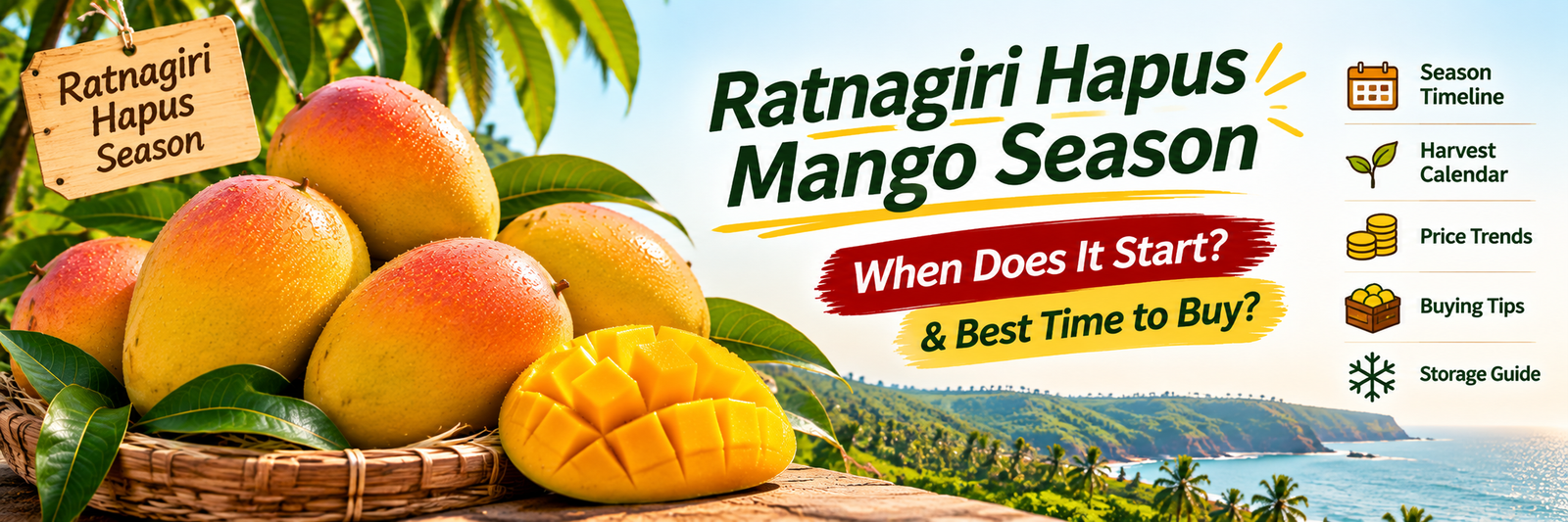
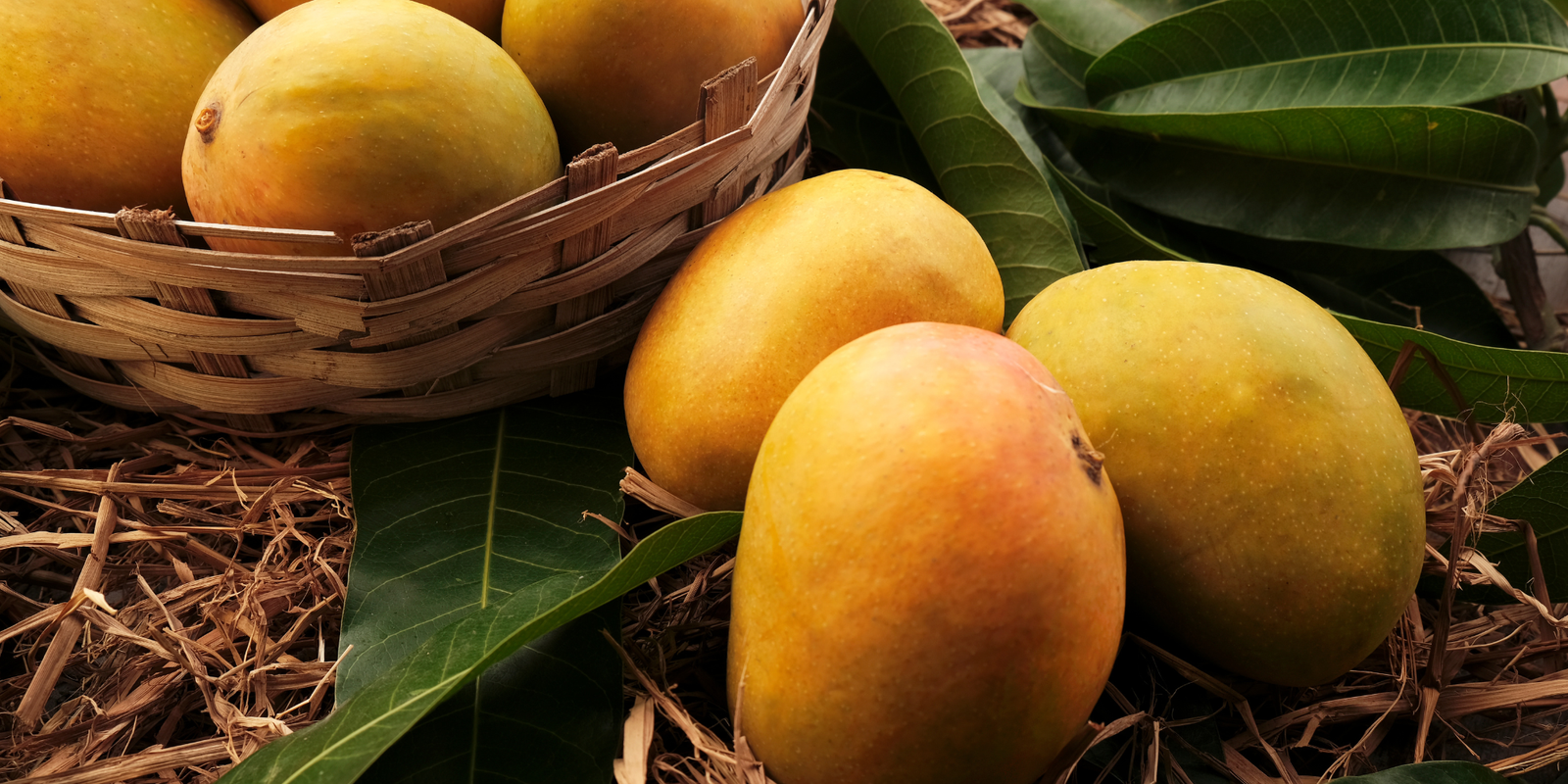
Ratnagiri Hapus Alphonso mango season and harvest in the Konkan region

The Ratnagiri Hapus mango season generally begins around March or April, with the main harvest taking place during April and May. However, the exact timing changes every year depending on flowering, weather conditions and fruit development.

Ratnagiri Hapus, also known as Ratnagiri Alphonso mango, is one of Maharashtra’s most recognised seasonal fruits. Mango lovers across India wait for the Konkan harvest to enjoy its distinctive aroma, rich sweetness and smooth pulp.

If you are planning to buy fresh Ratnagiri Alphonso mangoes, understanding the harvest calendar can help you choose the right time.

Here is everything you need to know about the Ratnagiri Hapus season, including its harvest timeline, availability, prices and buying tips.

When Does the Ratnagiri Hapus Mango Season Start?

The Ratnagiri Alphonso mango season generally develops during the summer months.

Early arrivals may reach markets before the main harvest. However, these early arrivals do not mean that the entire region has started regular harvesting.

According to the National Horticulture Board, the main harvesting period for mangoes in Ratnagiri, Maharashtra, is generally April to May.

The exact start date depends on weather, flowering and fruit maturity.

Read our detailed guide to the Alphonso Mango Season for more information about the annual harvest cycle.

Ratnagiri Hapus Season: Month-by-Month Guide

The following calendar provides a general overview of the mango-growing and harvesting cycle.

PeriodWhat generally happens
October–NovemberOrchard preparation and tree management
December–JanuaryFlowering begins in many orchards
February–MarchFruit development and possible early arrivals
AprilMain harvesting activity increases
MayImportant harvesting and market availability period
JuneAvailability may continue in some areas, depending on the crop

This is a general guide, not a fixed annual calendar. Weather conditions can shift the timing.

When Is the Best Time to Buy Ratnagiri Hapus?

The best time depends on what you are looking for.

If you want early-season mangoes, you may find limited arrivals before the main harvest.

However, if you prefer more choices in fruit grades and sizes, the main harvest period is generally a better time to compare sellers and products.

Before buying, consider:

  • Fruit maturity and ripeness.
  • Size and weight category.
  • Growing region.
  • Natural ripening method.
  • Packaging quality.
  • Delivery time.

Do not assume that the earliest mangoes are always the best. Fruit maturity and handling are equally important.

Why Does the Ratnagiri Hapus Season Change Every Year?

Mango production depends on several agricultural and environmental factors.

1. Temperature

Temperature influences flowering and fruit development. Unusual temperature changes can affect flowering and fruit formation.

2. Rainfall

Rainfall patterns influence orchard conditions and fruit development. Excessive or poorly timed rainfall can create challenges for growers.

3. Flowering

Mango flowering is an important stage in determining the coming harvest.

If flowering is affected by weather or other conditions, fruit setting and final production may also change.

4. Pest and Disease Pressure

Orchard health influences fruit quality and the quantity of marketable mangoes.

5. Harvest Maturity

Mangoes need to be harvested at the appropriate stage of maturity. Harvesting too early or too late can affect the ripening process and fruit quality.

Why Are Ratnagiri Hapus Mango Prices Different Every Year?

The price of Ratnagiri Hapus can change from one season to another.

Important factors include:

  • Total mango production.
  • Weather conditions.
  • Demand from different cities.
  • Fruit size and grade.
  • Harvesting and labour costs.
  • Packaging and transportation.
  • Wholesale market arrivals.

When production is low and demand remains strong, prices may increase. On the other hand, better market arrivals can provide buyers with more choices.

Read our article on Alphonso Mango Price Trends to understand the factors that influence mango prices.

Early Alphonso Mango Arrivals: Do They Mean the Season Has Started?

Not necessarily.

Some orchards produce early mangoes before the main harvesting period. These fruits may attract premium prices because their availability is limited.

For example, early Alphonso mango arrivals were reported in Pune during January 2026. However, early arrivals should not be confused with regular seasonal supply.

Read our report on Pre-Season Alphonso Mangoes Arrive Early in Pune to understand how early market arrivals work.

You can also read our Alphonso Mango Season 2026 update for details about pre-orders and seasonal availability.

How to Store Ratnagiri Hapus Mangoes at Home

Once your mangoes arrive, handle them carefully.

Follow these simple tips:

  1. Keep unripe mangoes at room temperature in a suitable ventilated place.
  2. Avoid placing heavy objects on the fruits.
  3. Check the mangoes regularly as they ripen.
  4. Separate damaged or overripe fruits.
  5. Once ripe, refrigerate them if you want to slow further ripening.
  6. Allow refrigerated mangoes to come closer to room temperature before eating.

For additional guidance, read our article on How to Ripen Mangoes Naturally at Home.

Where Can You Buy Ratnagiri Hapus Mangoes Online?

You can buy Ratnagiri Hapus mangoes online from sellers who provide clear details about their growing region, fruit size, box quantity and delivery process.

Ratnagiri Hapus Store focuses on sourcing Ratnagiri and Devgad Alphonso mangoes from the Konkan region. We believe in natural ripening and careful fruit handling to help preserve the fruit’s natural aroma, flavour and texture.

You can also explore Hapuschi Wadi, another online destination for Ratnagiri and Devgad mangoes and mango products.

Visit Ratnagiri Hapus Store for seasonal availability, product information and ordering updates.

Frequently Asked Questions

1. When does the Ratnagiri Hapus season start?

The season generally develops during March and April. The main Ratnagiri harvest is usually around April and May.

2. Which month is best for Ratnagiri Alphonso mangoes?

April and May are important months for the main Ratnagiri harvest. However, fruit quality depends on maturity, orchard conditions and handling.

3. How long does the Ratnagiri Hapus season last?

The main harvest is generally concentrated around April and May, although availability can extend into June in some areas and years.

4. Why are Ratnagiri Hapus mangoes not available throughout the year?

Fresh Alphonso mangoes depend on the natural flowering and fruiting cycle of mango trees. Therefore, their availability is seasonal.

5. Why do Hapus mango prices increase in some years?

Lower production, weather-related crop losses, labour costs, transportation and strong demand can influence market prices.

6. Are early-season Hapus mangoes better?

Not necessarily. Early availability does not automatically mean better quality. Fruit maturity, aroma, taste and handling are important.

7. Can Ratnagiri Hapus mangoes be delivered across India?

Availability depends on the seller’s delivery network, packaging and seasonal stock. Check delivery serviceability for your PIN code before ordering.

8. How should I ripen Ratnagiri Hapus mangoes at home?

Keep unripe mangoes at room temperature in a ventilated place and check them regularly. Avoid unsafe chemical ripening methods.
Posted on — Leave a comment

First Hapus Mango Box Fetches ₹36,000 at Vashi APMC: Why One Mango Is Worth Nearly ₹500

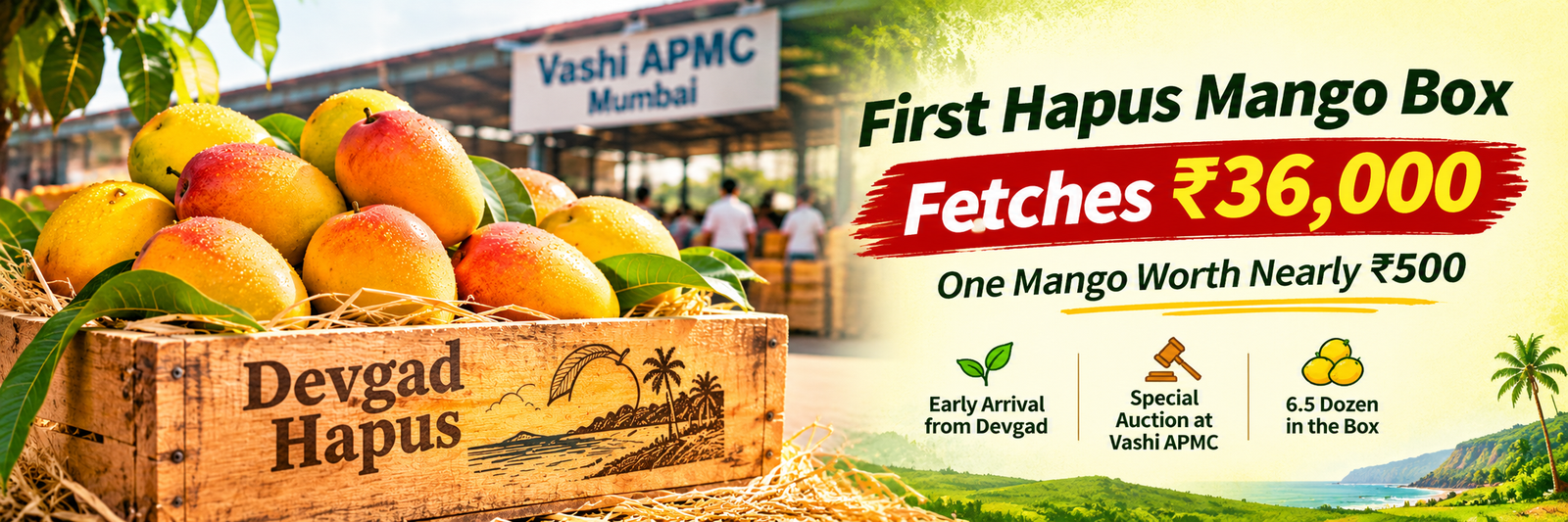
First Devgad Hapus mango box sold for ₹36,000 at Vashi APMC market

The first arrival of Devgad Alphonso mangoes at Mumbai’s Vashi APMC market has created excitement among mango lovers and traders. In an unusual pre-season arrival in October 2026, a box of Devgad Hapus mangoes fetched an impressive ₹36,000 at the market.

The box came from the orchard of farmer Milesh Bandkar in Girye-Rameshwar village, Devgad taluka, Sindhudurg district. It contained approximately 6.5 dozen mangoes. The remarkable auction price has once again highlighted the demand for premium-quality Alphonso mangoes, even before the regular season begins.

But why would anyone pay ₹36,000 for a single box of mangoes? And what makes the first Hapus arrivals so valuable?

Let’s understand the story behind this remarkable auction.

First Devgad Hapus Box of the Season Reaches Vashi Market

According to reports, farmer Milesh Bandkar successfully harvested an early crop of Devgad Hapus mangoes from his orchard in Girye-Rameshwar.

The first box was harvested around the occasion of Sankashti and sent to Mumbai’s Vashi APMC market. It attracted significant attention because the regular Alphonso mango season was still months away.

The box contained around 6.5 dozen mangoes and fetched ₹36,000 at auction. Based on approximately 78 mangoes in the box, the auction price works out to an average of nearly ₹462 per mango.

This was a special early-season auction. It should not be confused with the usual market price of Alphonso mangoes during the main season.

Why Did the First Hapus Mango Box Fetch ₹36,000?

The price was driven by several factors.

1. Very Limited Availability

The first mangoes of the season are available in extremely small quantities. Unlike the regular summer harvest, these early fruits are not yet reaching the market in large numbers.

When supply is limited and buyers are eager to get the first arrivals, prices can rise significantly.

2. Early Harvest Before the Regular Season

Alphonso mangoes are generally associated with the summer season. However, some growers use careful orchard management to produce an early harvest.

Bringing mature fruits to market months before the regular season can attract attention from traders and premium buyers.

3. Farmer’s Effort and Orchard Management

Producing mangoes outside the usual season requires careful attention to flowering, fruit development and weather conditions.

In this case, the grower’s effort in protecting and nurturing the crop helped make the early harvest possible.

4. Strong Demand for Devgad Hapus

Devgad Hapus is widely recognised among mango lovers for its distinctive aroma, taste and texture.

The early arrival created excitement among traders who wanted to purchase the first available fruits. This demand contributed to the exceptional auction price.

Is ₹500 the Normal Price of One Alphonso Mango?

No. The ₹36,000 auction price does not represent the normal retail price of Alphonso mangoes.

The reported box contained approximately 6.5 dozen, or 78 mangoes. Dividing the total auction value by the approximate number of fruits gives an average of around ₹462 per mango.

This is an exceptional early-season auction value. During the regular season, prices depend on fruit size, quality, maturity, supply, demand and market conditions.

For a better understanding of how mango prices change, read our article on Alphonso Mango Price Trends.

Ratnagiri Hapus vs Devgad Hapus: What Is the Difference?

Ratnagiri and Devgad are two well-known Alphonso mango-growing regions in Maharashtra’s Konkan belt.

Both are associated with premium Hapus mangoes. However, their growing locations, local conditions and orchard practices can influence the characteristics of the fruit.

Mango lovers often compare the two based on aroma, taste, appearance and availability.

The ₹36,000 auction story is specifically about Devgad Hapus. It does not mean that one region’s mangoes are always more expensive than the other’s. Prices can vary according to the quality of each consignment and the timing of its arrival.

You can also explore our guide to Alphonso mangoes to learn more about this popular mango variety.

When Will the Regular Alphonso Mango Season Begin?

The October arrival is an early harvest, not the beginning of the regular commercial season.

The main Alphonso mango season generally develops over the following months, with availability increasing as more fruit matures and harvesting begins across the Konkan region.

The timing and quantity of the harvest can change every year because mango production depends on several factors, including:

  • Weather during flowering.
  • Temperature and rainfall.
  • Fruit development and maturity.
  • Orchard management.
  • Pest and disease pressure.

As the season progresses, arrivals at wholesale markets such as Vashi APMC usually increase. This gives buyers more options across different fruit sizes and price ranges.

Why Are Alphonso Mango Prices Different Every Year?

Alphonso mango prices are influenced by both agricultural conditions and market demand.

A season with lower production can lead to limited supply and higher prices. On the other hand, a larger harvest can increase market arrivals and create more competitive pricing.

Other factors include transportation, packaging, harvesting, grading and storage.

Therefore, the price of the first box cannot be used to predict the price of mangoes throughout the season.

For more information, visit our Ratnagiri Hapus Store and follow our updates as the new mango season approaches.

Buy Original Ratnagiri Hapus Mangoes Online

For mango lovers, the excitement of the first Hapus arrival is a reminder that the next mango season is approaching.

At Ratnagiri Hapus Store, our focus is on sourcing authentic Ratnagiri and Devgad Hapus mangoes from the Konkan region. We also believe in natural ripening and careful handling to preserve the fruit’s aroma, taste and texture.

If you are planning to enjoy fresh Alphonso mangoes, follow our website for seasonal availability and ordering updates.

Explore Ratnagiri Hapus Store for updates on fresh Hapus mangoes and other mango products.

Frequently Asked Questions

1. How much did the first Devgad Hapus mango box sell for in 2026?

The first reported box of Devgad Hapus mangoes fetched ₹36,000 at Vashi APMC market in October 2026.

2. How many mangoes were in the ₹36,000 box?

The box reportedly contained approximately 6.5 dozen mangoes, or around 78 fruits.

3. What was the average price per mango?

Based on the reported box price and quantity, the average works out to approximately ₹462 per mango. This is an auction-based calculation, not a regular retail price.

4. Where did the first box of Devgad Hapus come from?

The mangoes came from the orchard of farmer Milesh Bandkar in Girye-Rameshwar village, Devgad taluka, Sindhudurg district, Maharashtra.

5. Why are the first Alphonso mangoes so expensive?

The first arrivals are available in very limited quantities before the regular season. Their rarity and demand from traders can result in exceptionally high auction prices.

6. When is the regular Alphonso mango season?

The regular Alphonso mango season generally develops over the following months, with the main availability during the summer. Exact timing varies with weather and crop conditions.

7. Are Ratnagiri Hapus and Devgad Hapus the same variety?

Both are Alphonso mangoes grown in different parts of the Konkan region. Their growing conditions and local orchard practices can influence their individual characteristics.


About Ratnagiri Hapus Store

Ratnagiri Hapus Store brings authentic Konkan mangoes and mango products to customers across India. Our focus is on origin, quality and natural ripening.

Posted on — Leave a comment

What is Alphonso Mango? Everything You Need to Know About the King of Mangoes

What is Alphonso Mango? Everything You Need to Know About the King of Mangoes

Discover everything about Alphonso Mango—its origin, history, taste, growing regions, GI tag, health benefits, season, and why Ratnagiri Hapus is considered the finest mango in India.

What Is Alphonso Mango?

Alphonso Mango, popularly known as Hapus in Maharashtra, is one of the world’s most celebrated mango varieties. Famous for its rich sweetness, creamy texture, vibrant golden-yellow pulp, and irresistible aroma, it has earned the title “The King of Mangoes.”

Unlike many other mango varieties, Hapus offers a perfect balance of sweetness, fragrance, and smooth, fiberless pulp. As a result, it has become the preferred choice of mango lovers, chefs, exporters, and food manufacturers across the world.

India grows hundreds of mango varieties. However, Hapus continues to stand apart because of its exceptional eating quality and limited seasonal availability. Every year, millions of consumers eagerly wait for the arrival of fresh Ratnagiri Hapus, making it one of India’s most anticipated seasonal fruits.

Today, Alphonso is enjoyed not only as fresh fruit but also in mango pulp, juices, smoothies, desserts, ice creams, chocolates, cheesecakes, and premium confectionery products.

Why Is Alphonso Mango Called the King of Mangoes?

Alphonso did not receive the title “King of Mangoes“ by chance. Instead, it earned this reputation through generations of consistent quality and unmatched flavour.

Several qualities make Hapus superior to many other mango varieties.

Exceptional Sweetness

First, Alphonso develops a naturally rich sweetness during ripening. Unlike artificially sweet fruits, its flavour is balanced with mild citrus notes that create a refreshing taste.

Smooth, Fiberless Pulp

Another reason for its popularity is its buttery, fiberless texture. The pulp melts in your mouth, making it perfect for eating fresh as well as preparing desserts and beverages.

Rich Natural Aroma

One of the first things people notice about a ripe Alphonso Mango is its strong tropical fragrance. In fact, its aroma is often enough to identify an authentic Alphonso before cutting the fruit.

Premium Appearance

A ripe Alphonso usually develops a beautiful golden-yellow skin with deep saffron-colored pulp inside. Although every mango may look slightly different, premium hapus Mangoes have a distinctive appearance that consumers instantly recognize.

Limited Seasonal Availability

Unlike many fruits available throughout the year, fresh Alphonso Mangoes are harvested only once every season. Therefore, their short availability increases both their exclusivity and demand.

International Recognition

Today, Ratnagiri Hapus Mango is exported to several countries around the world. Its premium quality has made it one of India’s most valuable fruit exports and one of the country’s best-known agricultural products.

Because of these qualities, Ratnagiri Hapus Mango continues to enjoy its reputation as the true King of Mangoes.

The History and Origin of Alphonso Mango

The history of Alphonso Mango dates back more than 500 years.

During the 16th century, Portuguese explorers introduced improved grafting techniques to India’s western coast. Many historians believe that the mango eventually came to be associated with Afonso de Albuquerque, a Portuguese military commander and administrator. Although historians continue to debate the exact origin of the name, the variety gradually became known as Alphonso.

Over the centuries, farmers in Maharashtra’s Konkan region refined cultivation techniques and selected superior trees generation after generation. Consequently, the Ratnagiri Hapus Mango evolved into the premium variety we know today.

Modern Ratnagiri Hapus Mango is therefore the result of centuries of traditional farming, careful selection, and favourable natural conditions rather than a single historical event.

Why Does Alphonso Mango Taste Different?

Many consumers wonder why Alphonso Mango tastes different from other mango varieties.

The answer lies in a combination of natural factors rather than a single reason.

These include:

  • Coastal climate
  • Mineral-rich laterite soil
  • Sea breeze
  • Heavy monsoon rainfall
  • Warm summer temperatures
  • Traditional orchard management
  • Natural ripening process

Together, these conditions help develop the mango’s unique sweetness, aroma, texture, and saffron-colored pulp.

No artificial process can replicate this combination of natural factors. Therefore, authentic Ratnagiri Alphonso continues to maintain its premium reputation.

Why Is Alphonso Mango Famous Worldwide?

Mangoes one of India’s most recognized agricultural products.

Consumers around the world appreciate it because of its:

  • Naturally sweet flavour
  • Creamy, fiberless texture
  • Rich tropical aroma
  • Bright saffron-colored pulp
  • Premium quality
  • Excellent suitability for desserts and beverages

Besides fresh consumption, Alphonso Mango is widely used in premium food products such as:

  • Mango pulp
  • Ice cream
  • Cheesecakes
  • Milkshakes
  • Smoothies
  • Yogurt
  • Chocolates
  • Bakery products
  • Fruit concentrates

Because of this versatility, demand for Alphonso continues to grow in both domestic and international markets.

Quick Facts About Alphonso Mango

FeatureDetails
Common NameAlphonso Mango
Local NameHapus
Scientific NameMangifera indica
Main Growing StateMaharashtra
Premium Growing RegionsRatnagiri, Devgad, Raigad, Palghar
Fruit SeasonMarch to June
TextureSmooth and Fiberless
TasteSweet with mild citrus notes
Pulp ColorDeep Golden Yellow to Saffron
GI TagYes (Ratnagiri Alphonso)
Best UsesFresh Fruit, Pulp, Desserts, Juices, Ice Cream

Frequently Asked Questions

Is Alphonso Mango the best mango in India?

Many people consider Alphonso Mango to be India’s finest mango because of its sweetness, aroma, and creamy texture. Taste preferences, however, can vary from person to person.

Is Alphonso Mango naturally sweet?

Yes. Its sweetness develops naturally as the fruit ripens on the tree and after harvest.

Why is Ratnagiri Alphonso Mango famous?

Ratnagiri’s coastal climate, laterite soil, and traditional cultivation methods contribute to the mango’s distinctive flavor and aroma.

What is the difference between Alphonso and Hapus?

There is no difference. “Hapus” is the Marathi name for Alphonso Mango.

Can Alphonso Mango be exported?

Yes. Fresh Alphonso Mangoes and processed products such as mango pulp are exported to many countries, subject to the importing country’s regulations.

Conclusion

Alphonso Mango is more than just a fruit—it is a symbol of India’s rich agricultural heritage and one of the world’s most celebrated mango varieties. With its unmatched sweetness, buttery texture, captivating aroma, and limited seasonal availability, it continues to delight mango lovers across the globe.

If you’re looking for an authentic experience, choose naturally ripened, GI-recognized Ratnagiri Alphonso Mangoes from a trusted source to enjoy the true taste of the Konkan region.

Posted on — Leave a comment

Top 5 Cities Where Alphonso Mango Demand Is Highest in 2026

Top 5 Cities Where Alphonso Mango Demand Is Highest in 2026

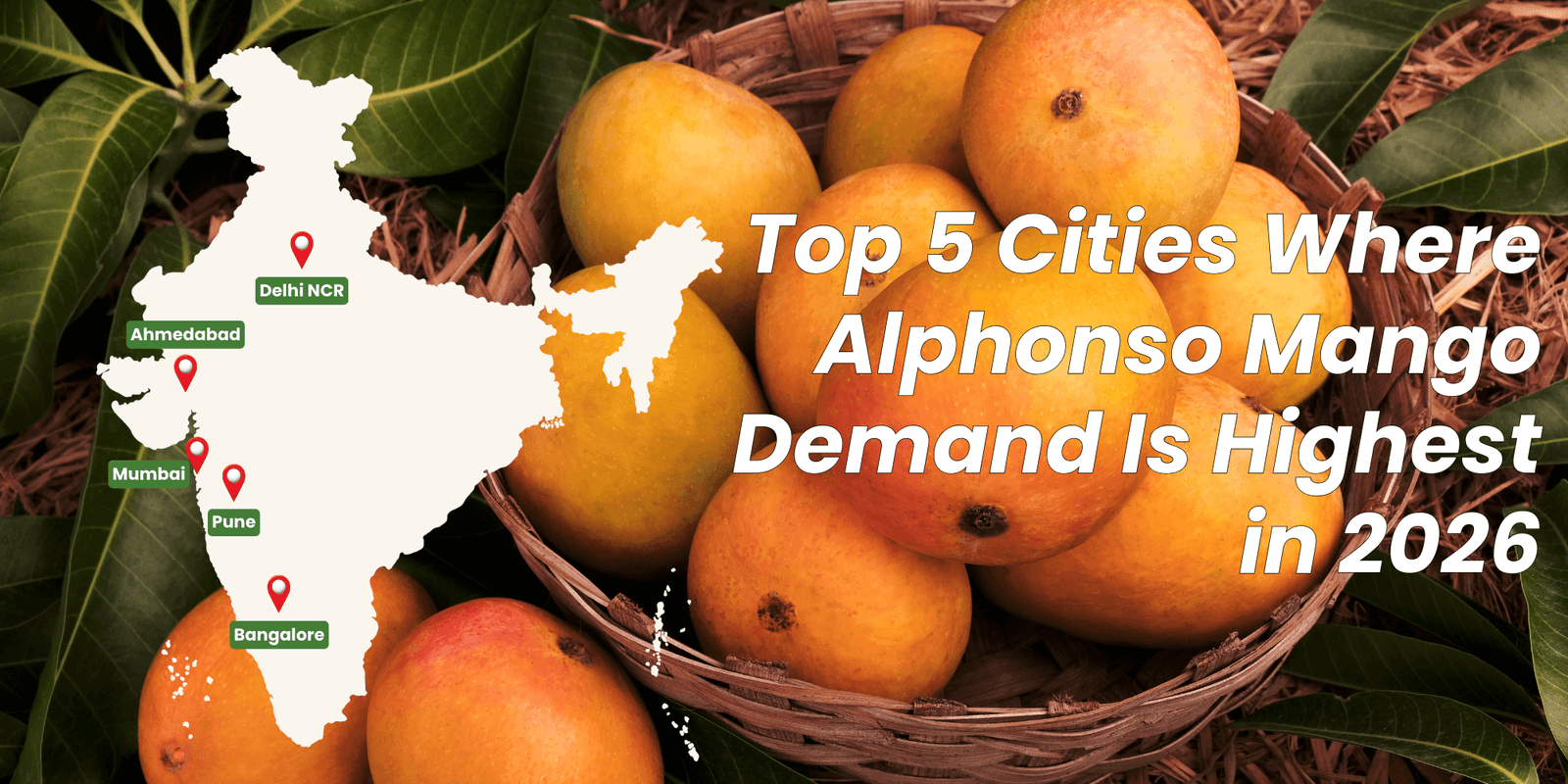
As the 2026 mango season unfolds, demand for authentic Ratnagiri Alphonso (Hapus) remains strong across India’s major urban markets. While Alphonso mangoes are grown mainly in the Konkan region of Maharashtra, their biggest consumption hubs lie in large metropolitan cities where awareness, purchasing power, and seasonal tradition drive steady Alphonso Mango Demand In Cities

Alphonso Mango Demand In Cities

Based on market trends, trader feedback, and seasonal buying patterns, here are the top five cities where Alphonso mango demand is highest in 2026.

1. Mumbai – The Largest Alphonso Market

Mumbai continues to lead as the strongest market for Alphonso mangoes. Due to its proximity to Ratnagiri and Devgad, the city receives early and regular arrivals throughout the season. Wholesale markets in Vashi and Crawford Market report consistent movement of premium-grade Hapus.

Corporate gifting, hospitality demand, and high consumer awareness make Mumbai the most stable and high-volume Alphonso market every year.

2. Pune – Quality-Conscious Buyers Drive Demand

Pune has emerged as one of the most quality-driven Alphonso markets in Maharashtra. Buyers here actively look for GI-certified Ratnagiri Hapus and naturally ripened fruit.

With a strong base of professionals, IT sector employees, and traditional households, Pune shows steady seasonal demand. Traders report that premium-grade Alphonso mangoes often sell quickly in this city during peak weeks.

3. Delhi NCR – Premium Fruit Consumption Hub

Delhi NCR remains one of the largest non-coastal markets for Alphonso mangoes. Despite the distance from Konkan, demand remains high due to affluent consumer segments and gifting culture.

Export-quality fruit often finds strong buyers in Delhi. Traders note that Delhi customers increasingly ask for authentic origin details, reflecting growing awareness.

4. Bengaluru – Rising Demand for GI-Certified Alphonso

Bengaluru continues to show strong seasonal demand for premium Alphonso mangoes. The city’s tech-driven population and high disposable income support steady consumption.

Consumers in Bengaluru prefer naturally ripened fruit and farm-direct sourcing. As a result, Ratnagiri Alphonso maintains premium positioning in the Karnataka market.

5. Ahmedabad – Expanding Premium Fruit Market

Ahmedabad has emerged as a fast-growing market for Alphonso mangoes. While Gujarat has its own mango varieties, demand for Ratnagiri Hapus has increased in recent years.

Urban consumers and business buyers in Ahmedabad show growing interest in GI-certified mangoes, making the city one of the key western Indian demand centres in 2026.

Why These Cities Lead Alphonso Demand

Several factors influence demand concentration in these cities:

  • High purchasing power
  • Strong gifting culture
  • Awareness of GI certification
  • Preference for premium seasonal fruit
  • Active wholesale and logistics networks

In 2026, these factors continue to support steady and high-volume Alphonso mango movement in these top markets.

Final Outlook for 2026

Alphonso mango demand in 2026 remains strongest in Mumbai, Pune, Delhi NCR, Bengaluru, and Ahmedabad. While supply may fluctuate due to climate and seasonal factors, urban appetite for authentic Ratnagiri Hapus remains resilient.

As long as brand trust, seasonal value, and premium positioning stay intact, these five cities will continue to dominate Alphonso mango consumption trends.

Alphonso Mango Demand In Cities

Posted on — Leave a comment

Pre-Season Alphonso Mangoes Arrive Early in Pune in 2026

Pre-Season Alphonso Mangoes Arrive Early in Pune in 2026

Pune received an early indication of the upcoming Alphonso mango season in 2026 as the first pre-season mangoes entered the city’s wholesale market ahead of schedule. The arrival attracted strong interest from traders and officials, as Alphonso mangoes rarely appear in markets this early.

Ratnagiri Mangoes Fetch Premium Prices at Pune Market

The first consignment of Alphonso mangoes arrived from the Jaitapur area of Ratnagiri district, known for high-quality Konkan Hapus. Due to limited availability and early timing, each crate—containing around three dozen mangoes—was sold for approximately ₹15,000. Traders quickly purchased the entire lot, highlighting strong demand for early Alphonso mangoes.

Early Arrival Does Not Indicate Full Season Supply

Market officials clarified that these mangoes represent an early harvest from select orchards and do not mark the start of regular arrivals. Full-scale supply is expected only after harvesting increases across the Konkan region. Typically, Alphonso mangoes reach Pune markets in larger volumes from late February or March.

Weather Conditions Support Early Harvest in Konkan

According to traders and growers, favourable winter weather played an important role in the early fruit development. Cooler temperatures helped protect mango blossoms, resulting in early fruit setting in some orchards. While this has raised optimism for the 2026 season, overall yield trends will become clearer in the coming weeks.

Traders Expect Prices to Stabilise During Peak Season

The early arrival was formally welcomed by market representatives, reflecting the importance of Alphonso mangoes in Pune’s seasonal trade. Although prices are high at present due to limited supply, traders expect rates to stabilise as regular consignments arrive during the main season.

Early Entry Signals Start of 2026 Alphonso Mango Season

The pre-season arrival of Alphonso mangoes in Pune signals the approach of the 2026 mango season. While peak availability is still some time away, the early entry has created positive momentum and renewed interest among traders and consumers alike.

Posted on — Leave a comment

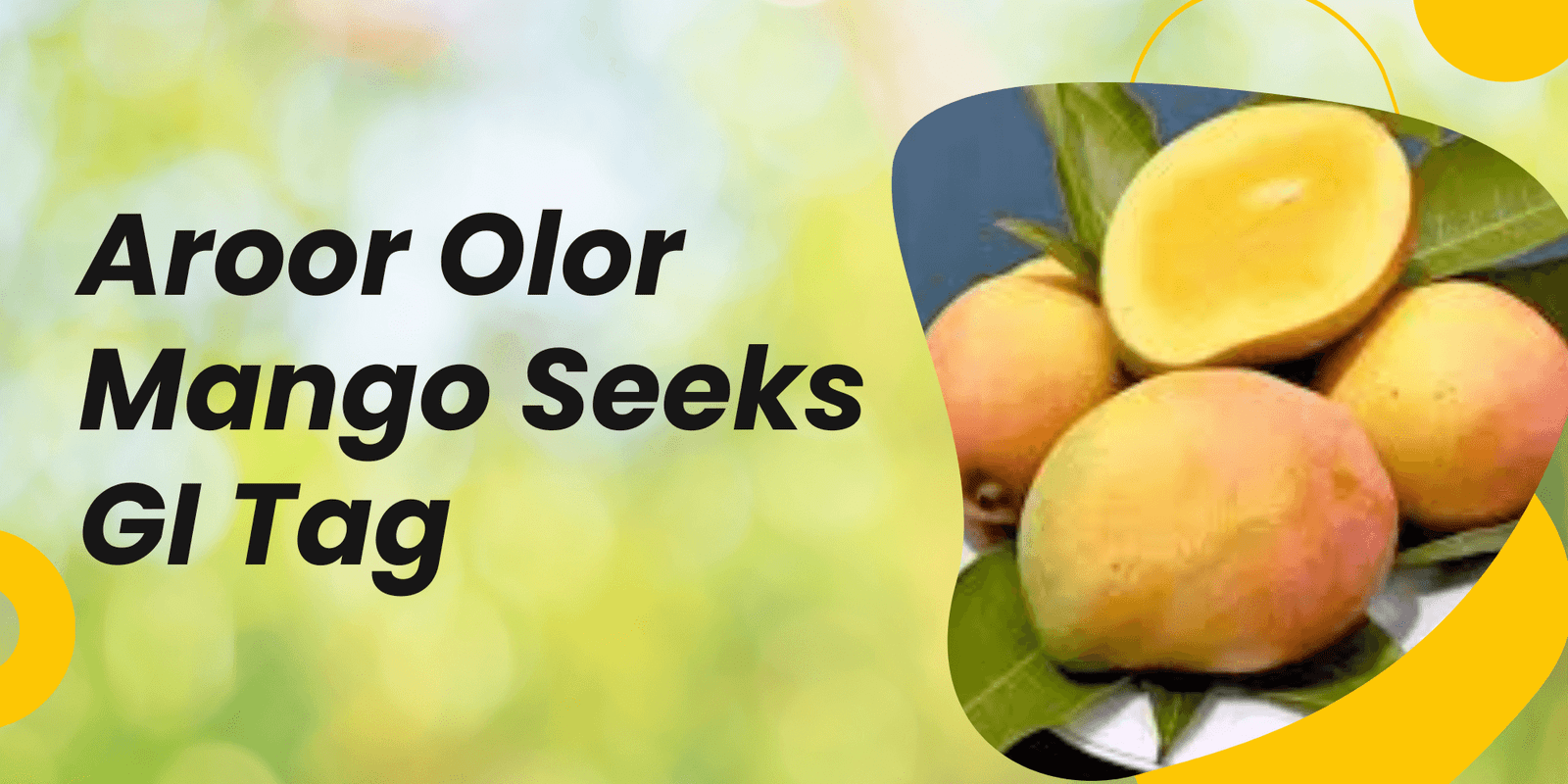
Aroor Olor Mango Seeks GI Tag — Following the Trailblazer, Ratnagiri Hapus

Aroor Olor Mango Seeks GI Tag — Following the Trailblazer, Ratnagiri Hapus

🌴 A New Star in India’s Mango Map

India’s love affair with mangoes has always been deep and poetic. But beyond taste and nostalgia lies something more official — the Geographical Indication (GI) tag, a legal recognition that ties a product’s identity to its native soil.

Recently, the Aroor Olor mango from Kerala made headlines for beginning its journey toward a GI certification, as reported by The New Indian Express (October 2025). The state’s agriculture department confirmed that studies and documentation are underway to establish its unique flavor, texture, and regional heritage.

And for mango lovers everywhere, that’s sweet news — because it continues a legacy started years ago by the legendary Ratnagiri Hapus (Alphonso).


🥭 Ratnagiri Hapus — The Benchmark for Authenticity

Before GI tags became trendy, Ratnagiri Hapus had already set the gold standard.
In 2018, the Geographical Indications Registry of India officially granted Ratnagiri and Devgad Alphonso mangoes the GI tag — recognizing their distinct aroma, golden saffron hue, and buttery pulp as products of a very specific terroir: the lateritic red soil and sea-kissed breeze of coastal Konkan.

This wasn’t just a bureaucratic badge — it was a cultural seal of purity.
It told the world: If it’s from Ratnagiri, it’s real Hapus.
And it inspired dozens of other regions — from Kerala to Bihar — to document their own fruit heritage.


🌍 Why GI Tags Matter So Much

GI tags protect not just products, but the communities and traditions behind them.
Here’s why they’re so powerful for India’s mango growers:

BenefitWhat It Means
🧾 Authenticity ProtectionPrevents other regions from falsely using the same name (like “Ratnagiri Hapus” sold from non-GI areas).
💰 Higher Farmer IncomeCertified produce earns premium pricing in domestic and export markets.
🌱 Cultural PreservationKeeps old farming techniques and local biodiversity alive.
🌏 Export RecognitionGI tags assure importers of origin and quality — a major advantage in global trade.

So when Kerala’s Aroor Olor mango begins its GI journey, it’s not just about one fruit — it’s about continuing India’s larger story of geographical pride and authenticity.


🧡 Lessons from Ratnagiri Hapus for Emerging GI Mangoes

As new contenders like Aroor Olor step into the GI process, the Ratnagiri experience offers timeless lessons:

  1. Document the DNA
    • Ratnagiri’s farmers recorded decades of soil data, rainfall patterns, and taste profiles to prove uniqueness.
  2. Organize Farmer Clusters
    • GI strength comes from unity — hundreds of Ratnagiri and Devgad farmers collaborated under regional boards.
  3. Maintain Purity Post-GI
    • After certification, quality control is ongoing. Packhouses, grading centers, and labeling systems ensure every exported Hapus meets the promise.
  4. Market the Story, Not Just the Fruit
    • Ratnagiri Hapus became a brand because it told its story beautifully — of coastal winds, handpicking, and generational heritage.

🍋 The Bigger Picture: India’s Mango Heritage Is Expanding

With varieties like Aroor Olor (Kerala), Malda Fazli (West Bengal), Kesar (Gujarat), and Banganapalli (Andhra Pradesh) already on the national map, India’s mango landscape is becoming a rich tapestry of local pride.

Each new GI tag adds another chapter to this delicious story — but the Ratnagiri Hapus remains the north star: the mango that taught India to value place-based authenticity.


🌞 Conclusion: The Sweetness of Provenance

As Aroor Olor prepares to claim its spot in the GI family, it follows in the fragrant footsteps of Ratnagiri Hapus — the mango that turned geography into greatness.

At Ratnagiri Hapus Store, we celebrate every mango that honors its roots.
Because whether it’s from Ratnagiri’s sun-drenched slopes or Kerala’s lush groves, true sweetness is born from authenticity.

🥭 Authentic. Verified. Proudly from Ratnagiri.
Explore our GI-certified Alphonso mangoes at ratnagirihapus.store

Posted on — Leave a comment

Why Some Alphonso Mango Shipments Are Being Rejected — and How Ratnagiri Hapus Ensures 100% Compliance

Why Some Alphonso Mango Shipments Are Being Rejected — and How Ratnagiri Hapus Ensures 100% Compliance

🥭 The Sweet Trade That Turns Bitter

Every mango season, thousands of boxes of India’s beloved Alphonso mangoes leave ports like Mumbai and Nhava Sheva, destined for customers in the U.S., U.K., Europe, and the Middle East.

But in recent months, there’s been worrying news — several shipments of Indian mangoes were rejected or destroyed abroad, primarily due to documentation errors, non-compliance, or pesticide residue issues.

For an exporter, that’s not just a financial loss — it’s a blow to India’s reputation and the hard work of farmers who nurture every fruit with love.


🚫 Why Are Shipments Being Rejected?

Based on trade reports and APEDA alerts, here are the top reasons Alphonso mango shipments face rejections at ports:

  1. Incomplete or incorrect phytosanitary certificates
    • Missing radiation treatment proof or wrong lot codes.
    • Non-alignment with import country’s specific format (e.g., USDA, DEFRA).
  2. Residue levels beyond permissible limits
    • Even trace pesticide residues above the MRL (Maximum Residue Limit) can trigger rejection.
    • Some farmers unknowingly use sprays too close to harvest time.
  3. Non-irradiated consignments
    • Especially for the U.S., every mango must undergo APHIS-approved irradiation before shipping.
    • A few exporters skip or mishandle this process, leading to bans or product destruction.
  4. Temperature and packaging lapses
    • Improper cold-chain logistics during transit cause ripening or spoilage before arrival.
  5. Mislabelling or misbranding
    • Exporting mangoes from non-GI (Geographical Indication) areas under the “Ratnagiri” or “Devgad Hapus” name can lead to penalties and rejections.

🧾 What Global Importers Expect

RegionCompliance FocusRequired Certificate
U.S.A.Irradiation & APHIS pre-clearanceUSDA / APHIS Certificate
E.U.Pesticide residue limits (MRL)Phytosanitary Certificate + MRL Lab Report
Middle EastOrigin verification & ripenessHealth Certificate + GI Tag
U.K.Traceability (farm to box)DEFRA Compliance Certificate

This growing list of checks ensures consumer safety — but it also means exporters need perfect documentation and traceable supply chains.


✅ How Ratnagiri Hapus Store Ensures 100% Compliance

At Ratnagiri Hapus Store, we’ve built a zero-compromise export system to make sure our fruits reach your doorstep safely, legally, and in perfect condition:

  1. Registered GI-Certified Farms Only
    • We source exclusively from Ratnagiri and Devgad farms registered under the GI tag of “Ratnagiri Hapus”.
  2. APEDA-Approved Packhouses
    • Every consignment is processed at an APEDA-certified packhouse with in-house cold storage and irradiation linkage.
  3. Pre-Shipment Quality Checks
    • Random batch testing for pesticide residues, Brix value (sweetness), and firmness.
  4. Full Traceability
    • Every box has a QR code linking to its orchard, batch date, and packing details.
  5. Export-Ready Packaging
    • Special ventilated 3-ply cartons designed for long-haul flights to maintain firmness and aroma.
  6. Real-Time Shipment Monitoring
    • IoT-enabled temperature loggers track every shipment from Mumbai to destination — we share data transparently with buyers.

🌍 Setting the Gold Standard in Mango Exports

While others race to meet order deadlines, Ratnagiri Hapus Store takes the long view — prioritizing reliability, documentation, and customer trust.

We believe authentic Alphonso deserves authentic handling.
Our motto: “If it’s not fully compliant, it’s not Ratnagiri Hapus.”

When you order from us — whether you’re a retailer in Dubai or a family in London — you’re not just buying a fruit.
You’re buying Konkan’s pride, protected by compliance, care, and integrity.


📦 Conclusion: Sweetness Without Shortcuts

As India’s mango exports grow, so do the regulations — and that’s a good thing. It keeps the brand “Ratnagiri Hapus” synonymous with quality, purity, and trust.

While others struggle with rejections, we focus on prevention.
Our fruits pass every test — so the only thing you taste is sweet success.

Posted on — Leave a comment

Hapus Mango Market Update 2025: 9,000 Boxes Arrive at Vashi APMC Amidst Climate Challenges

Hapus Mango Market Update: 9,000 Boxes Arrive at Vashi APMC Amidst Climate Challenges

The much-anticipated Hapus (Alphonso) mango season has officially commenced, with a significant influx of 9,000 boxes arriving at Mumbai’s Vashi Agricultural Produce Market Committee (APMC). This marks a substantial increase compared to previous weeks, where arrivals were limited to around 700 boxes, predominantly from the Devgad region. Hapus Mango Market Update: 9,000 Boxes Arrive at Vashi APMC Amidst Climate Challenges

lokmat.com

Market Prices and Dynamics

The surge in arrivals has led to a notable impact on market prices. Previously, with limited supply, prices ranged between ₹8,000 to ₹10,000 per box. However, the recent influx has caused prices to stabilize, with current rates averaging between ₹7,000 to ₹12,000 per box, depending on quality and size.

lokmattimes.com

Factors Influencing the Market

Several factors have contributed to the current market scenario:

  • Climate Challenges: Extended monsoons and unseasonal weather patterns have affected the flowering and ripening cycles of mangoes, leading to initial delays in arrivals. lokmattimes.com
  • Regional Variations: The majority of the recent arrivals are from the Devgad region, with Ratnagiri Hapus expected to enter the market around mid-March. lokmattimes.com

Looking Ahead

As the season progresses, consumers can anticipate increased availability of both Devgad and Ratnagiri Hapus mangoes. This is likely to result in more competitive pricing and a wider selection in the market. Traders remain optimistic about maintaining a steady supply, ensuring that mango enthusiasts can relish the king of fruits throughout the season.

Stay tuned for further updates on market trends, pricing, and availability as the Hapus mango season unfolds.

Order Fresh Hapus Mangoes Online in 2025!

For those looking to buy authentic Alphonso mangoes directly from trusted sources, Ratnagiri Hapus Store offers a seamless online shopping experience. With nationwide delivery and a commitment to quality, customers can now get their favorite mangoes delivered straight to their doorstep.

As the Hapus mango season 2025 unfolds, mango lovers have much to look forward to. Whether you prefer Devgad Hapus or Ratnagiri Hapus, the coming months promise a delightful treat for all! Stay tuned for updates on market trends, pricing, and availability. 🍋🥭 Hapus Mango Market Update: 9,000 Boxes Arrive at Vashi APMC Amidst Climate Challenges

Posted on — Leave a comment

India The Land of Mangoes Know the Story

India The Land of Mangoes

India is often called the “Land of Mangoes,” a title well-deserved by this tropical paradise that grows over 1,500 varieties of the beloved fruit. From the golden Alphonso to the juicy Dussehri, mangoes are not only a staple of the Indian summer but are also woven deeply into the country’s culture, heritage, and economy.

1. The Origin and History of Mangoes in India

Mangoes (Mangifera indica) have a rich history in India, with cultivation dating back over 4,000 years. Originally found in the forests of the Indian subcontinent, mangoes have been celebrated in ancient texts and legends. For instance, mangoes were revered in Hindu mythology, symbolizing prosperity and love. The fruit also found favor in the courts of Indian royalty, with emperors like Akbar planting thousands of mango trees. Over centuries, India’s climate and terrain have allowed the mango to flourish, making it the world’s top mango producer today.

2. Diverse Mango Varieties make India The Land of Mangoes

India’s diverse climate and geography contribute to its array of unique mango varieties, each with its distinctive flavor, aroma, and color. Here are some of the most famous ones:

  • Alphonso (Hapus): Known as the “King of Mangoes,” Alphonso is celebrated for its rich, sweet taste and buttery texture. Primarily grown in Maharashtra’s Ratnagiri region, Alphonso is a delicacy in India and is exported globally.
  • Kesar: This variety, grown mainly in Gujarat, is renowned for its bright saffron color and sweet taste. Its name, “Kesar,” meaning saffron, reflects its striking color and intense aroma.
  • Dussehri: Originating from Uttar Pradesh, Dussehri mangoes are prized for their fragrant, sweet, and fibrous flesh. They’re often enjoyed as a fresh snack in the northern regions of India.
  • Langra: Known for its greenish skin even when ripe, Langra mangoes are popular in Bihar and the northern states. They have a tangy, slightly acidic flavor that stands out among mango varieties.
  • Himsagar: Native to West Bengal, Himsagar is a small, juicy mango with a creamy texture, perfect for making desserts.
  • Neelum: Grown in South India, Neelum mangoes are available later in the season and are enjoyed for their subtle sweetness and long shelf life.

Each of these varieties has its own season, typically from March to July, making the Indian summer a mango lover’s delight.

3. Mangoes and Cultural Significance in India

Mangoes hold a deep cultural significance in India, appearing in festivals, rituals, and traditional art. The leaves and fruit are often used in Hindu festivals and ceremonies, symbolizing purity and prosperity. During weddings and celebrations, mango leaves are hung at doorways to invite good fortune. The mango is also a popular motif in traditional Indian art, known as the “paisley” design in textiles and decorations.

Culinary traditions around mangoes are also rich and diverse. While fresh mangoes are enjoyed as a seasonal snack, they’re also transformed into various dishes, from refreshing mango lassi to spicy mango pickle, a staple in Indian households. Mangoes are pureed for desserts, cooked into chutneys, and used in savory dishes, showcasing the fruit’s versatility in Indian cuisine.

4. The Economic Importance of Mangoes in India

Mangoes are a significant part of India’s agricultural economy, contributing to both domestic and export markets. India grows approximately 40% of the world’s mangoes, and while much of this is consumed locally, a considerable amount is exported, especially Alphonso, to countries like the United States, UAE, and Europe. The mango industry supports millions of farmers and workers in India, especially in mango-growing states like Maharashtra, Andhra Pradesh, Uttar Pradesh, and Gujarat.

5. Geographical Indication (GI) Status of Indian Mangoes

Several Indian mango varieties, like the Alphonso from Ratnagiri and Kesar from Gujarat, have received Geographical Indication (GI) tags, protecting their identity and quality. GI tags not only help preserve the unique characteristics of these regional varieties but also support the economic interests of local farmers by preventing counterfeit products in the market.

6. The Future of Mango Cultivation in India

With changing climate patterns, Indian mango cultivators are exploring sustainable farming methods to protect the fruit from extreme weather and pests. Scientists and farmers are also developing hybrid varieties to meet demand and withstand climate variations. Moreover, research on mango storage and transportation aims to extend the fruit’s shelf life, enhancing India’s export potential.

Conclusion

India’s bond with mangoes is as vibrant as the fruit itself. Mangoes are more than just a seasonal treat in India—they’re a symbol of heritage, an economic pillar, and a source of joy for millions. Every summer, mangoes bring families and communities together, whether for a simple slice of the fruit or elaborate recipes. As India continues to honor its mango-growing traditions while innovating for the future, it remains firmly the “Land of Mangoes,” bringing its rich flavors and cultural richness to the world.

Posted on — Leave a comment

The King of Mangoes: Exploring the Delightful World of Ratnagiri Hapus Mango

Alphonso Mangoes Near Me

Dive into the sweetness and richness of Ratnagiri Hapus Mango with our curated blog ideas. From tantalizing recipes to the journey from orchard to plate, discover the unique charm of the King of Mangoes in every bite.

1. "The Royal Journey: From Orchard to Plate"

Explore the enchanting journey of Ratnagiri Hapus Mangoes from the lush orchards to your plate. Uncover the meticulous cultivation, harvesting, and transportation processes that make this variety stand out.


2. "Mango Melodies: Hapus Mango in Culinary Symphony"

Delve into the world of culinary delights with Ratnagiri Hapus Mango. From refreshing smoothies to decadent desserts, discover mouthwatering recipes that showcase the versatility of this exquisite mango.


3. "Health Benefits of Ratnagiri Hapus Mango: A Nutrient-Packed Treat"

Highlight the nutritional goodness of Ratnagiri Hapus Mango. Discuss its rich content of vitamins, antioxidants, and fiber, and how incorporating this delicious fruit into your diet can contribute to a healthy lifestyle.