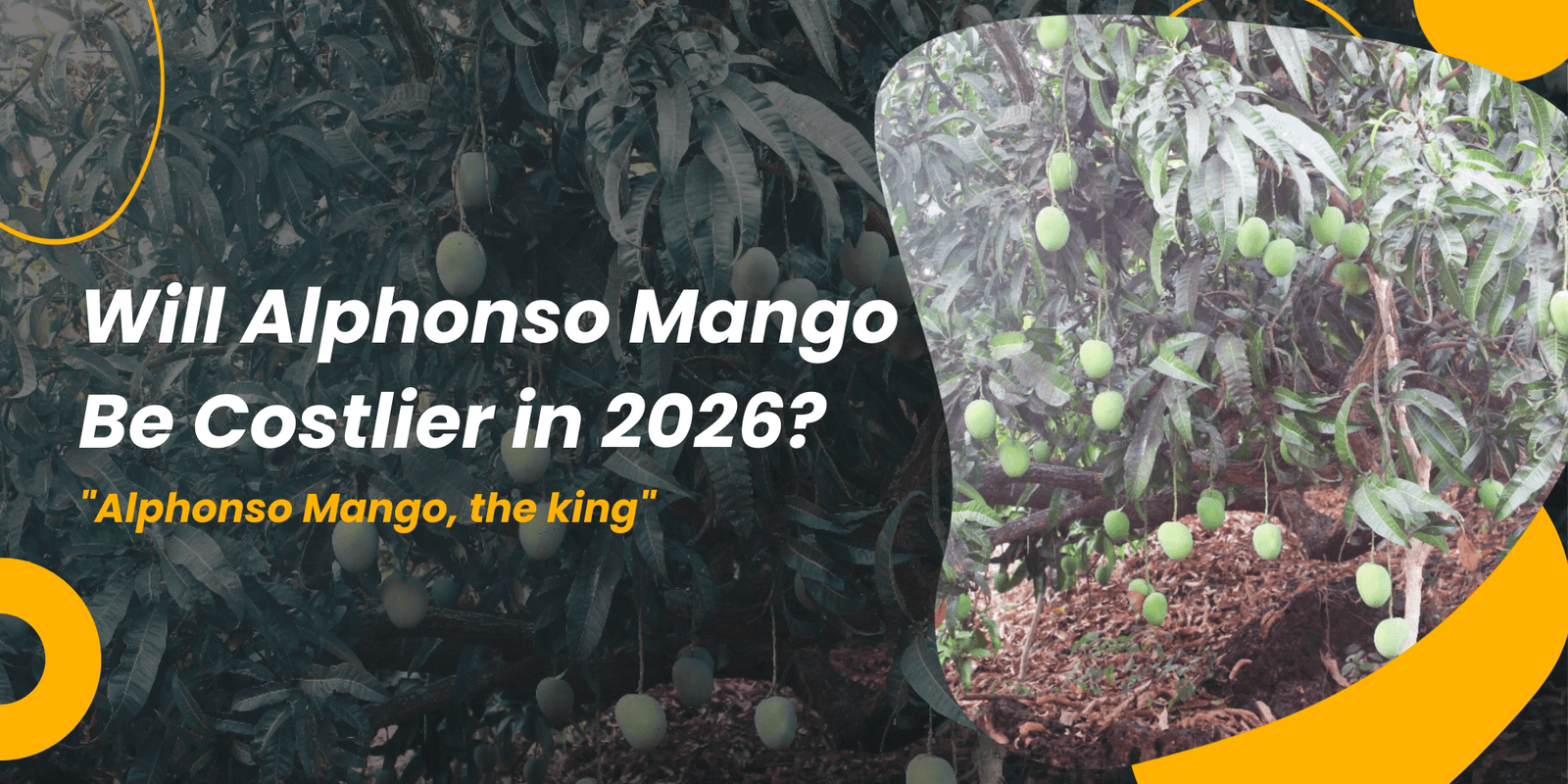
The 2026 Alphonso mango season has begun with uncertainty. Farmers in Ratnagiri and Devgad are closely monitoring orchards after irregular weather patterns affected flowering earlier this year. Traders in Mumbai and Pune say early market signals suggest that premium Ratnagiri Hapus could remain on the expensive side, at least during the beginning of the season.
Although full arrivals are yet to peak, discussions in wholesale markets indicate that supply conditions may not be as strong as a bumper year.
Blossom Damage in Konkan Sparks Worry
This season, parts of the Konkan belt witnessed temperature fluctuations and humidity shifts during the crucial flowering phase. Agricultural observers note that Alphonso mango is highly sensitive during blossom formation.
When blossoms fall early or fail to convert into fruit, overall yield drops. Even a small decline in fruit setting affects total output because Alphonso cultivation area remains limited.
Farmers describe the situation as “moderate stress, not disaster,” but enough to keep supply expectations cautious.
Main Ratnagiri Arrivals Still Building Up
Market yards are seeing gradual inflow rather than heavy early arrivals. Traders explain that when supply builds slowly and anticipation remains high, price sentiment stays firm.
Historically, early-season Alphonso always commands stronger demand. This year appears no different.
Alphonso Mango Be Costlier
Urban Demand Shows No Weakness
Despite seasonal uncertainty, demand in metro cities remains steady. Consumers continue to prioritise:
Alphonso mango is not just a fruit in cities like Mumbai, Pune, and Delhi. It is a seasonal tradition. That emotional connection often keeps demand stable even when supply tightens.
Export Activity Adds Pressure
Export demand for premium-grade Alphonso mango continues from Middle Eastern and international markets. Export-focused grading absorbs high-quality fruit first, which can tighten domestic premium supply.
When export channels remain active, local markets feel the impact.
Rising Farming Costs Add to the Equation
Farmers also report higher input costs this season. Labour, crop protection, orchard management, and transport expenses have increased compared to previous years.
When production becomes costlier, pricing adjusts across the supply chain.
Alphonso Mango Be Costlier
What This Means for 2026
If weather remains stable and arrivals improve, the market could see some mid-season balance. However, unless production significantly exceeds expectations, Alphonso mango in 2026 is likely to retain its premium positioning.
For buyers waiting for authentic Ratnagiri Hapus, this season may once again reflect the delicate balance between climate, cultivation, and demand.
The demand for authentic Alphonso mangoes is no longer limited to a few metro cities. Today, customers from both major and minor cities across India actively search for fresh, naturally ripened Alphonso mangoes delivered directly to their homes.
To meet this growing demand, Alphonso mangoes sourced from Ratnagiri and Devgad are now available for delivery across a wide network of cities—ensuring consistent quality, freshness, and authenticity throughout the season.
Alphonso Mangoes Available Pan-India During the Season
Alphonso mango delivery is available across most regions of India, covering metropolitan cities, Tier-2 cities, and smaller towns. This expansion allows mango lovers outside major metros to enjoy the same premium-quality Alphonso mangoes traditionally reserved for select markets.
Deliveries are planned according to harvest schedules, distance, and climate conditions to maintain fruit quality during transit.
Major Cities Where Alphonso Mangoes Are Delivered
Fresh Alphonso mangoes are delivered regularly to all major Indian cities, including:
Mumbai
Pune
Delhi NCR
Bengaluru
Hyderabad
Chennai
Ahmedabad
Kolkata
These cities benefit from faster logistics and more frequent dispatch schedules during the peak mango season.
Alphonso Mango Delivery in Tier-2 and Tier-3 Cities
In addition to metro cities, Alphonso mangoes are also delivered to numerous Tier-2 and Tier-3 cities, making premium mangoes accessible across the country.
This includes cities such as:
Nashik, Nagpur, Kolhapur, Sangli, Satara
Surat, Vadodara, Rajkot, Bhavnagar
Indore, Bhopal, Jabalpur
Jaipur, Udaipur, Kota
Chandigarh, Ludhiana, Amritsar
Coimbatore, Madurai, Salem, Trichy
Vijayawada, Guntur, Visakhapatnam
Kochi, Thrissur, Trivandrum
Delivery timelines may vary slightly based on location, but freshness and quality remain the priority.
How Alphonso Mangoes Are Delivered Fresh
To ensure mangoes reach customers in good condition, the delivery process follows strict quality steps:
Mangoes are harvested at proper maturity
Fruits are naturally ripened without chemicals
Sorting and grading are done at source
Secure packaging is used to prevent damage
Orders are dispatched quickly to destination cities
Most deliveries are completed within 2 to 5 days, depending on city and transport connectivity.
Authentic Ratnagiri Alphonso Sourcing
All Alphonso mangoes are sourced exclusively from GI-certified farms in Ratnagiri and Devgad, Maharashtra. These regions are globally recognised for producing Alphonso mangoes with superior aroma, taste, and texture.
Customers are advised to verify:
Origin details (Ratnagiri or Devgad)
Seasonal availability
Natural ripening methods
Avoid off-season claims, as genuine Alphonso mangoes are available only between March and June.
Why Customers Prefer City-Wide Delivery of Alphonso Mangoes
City-based delivery has become popular because it offers:
Access to authentic Alphonso mangoes outside metros
Consistent quality regardless of location
Better availability during peak season
Convenience of home delivery
This model bridges the gap between Konkan orchards and households across India.
Availability Timeline for Alphonso Mangoes
Pre-orders open: 15th January
Dispatch begins: 15th March
Peak season: April to May
Season ends: Early June
Early booking is recommended, especially for customers in non-metro cities.
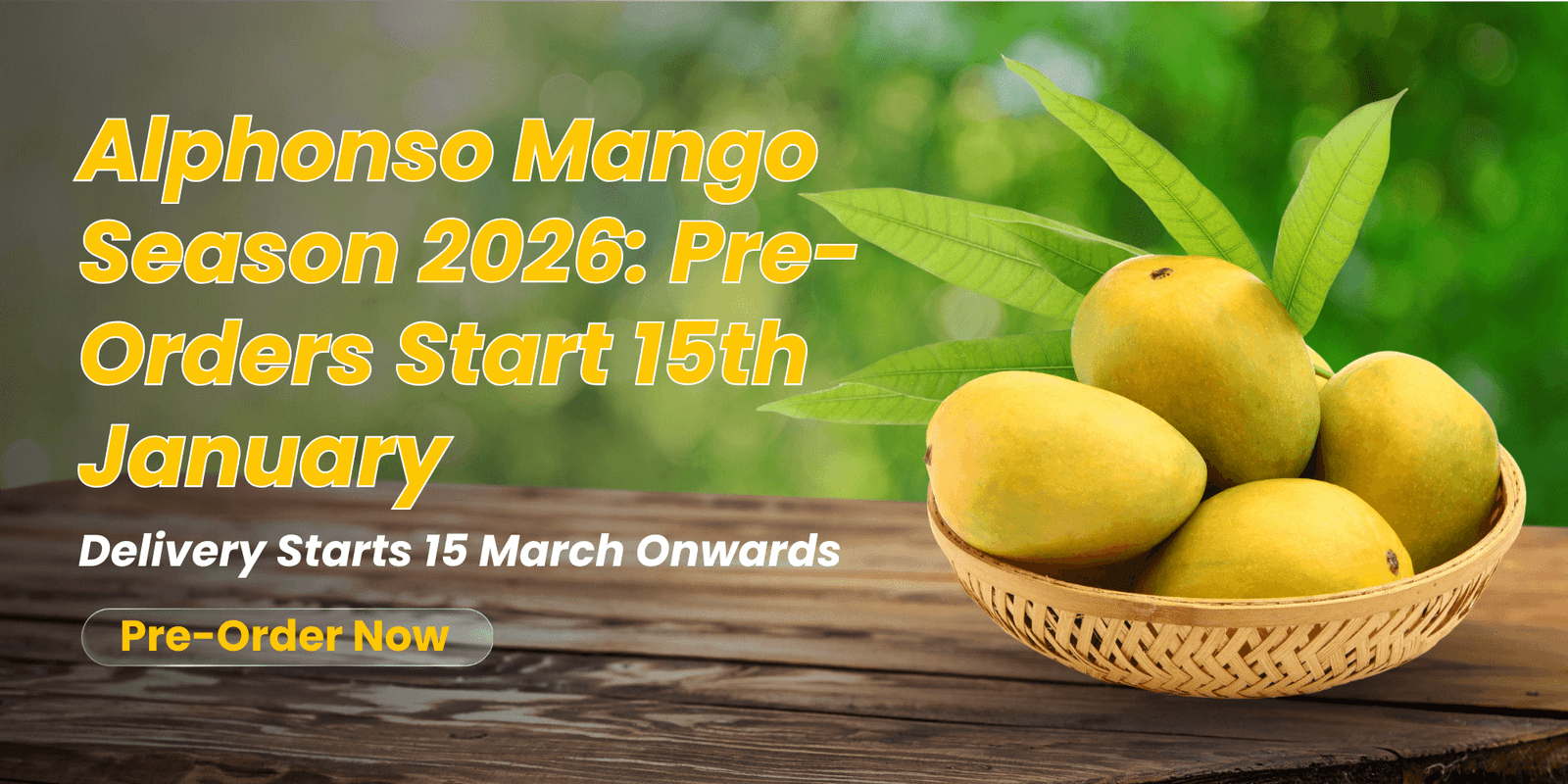
The wait for India’s most loved mango is almost over. Alphonso mango season 2026is approaching, and mango lovers can now plan ahead. To ensure availability of authentic, premium-quality mangoes, pre-orders will open from 15th January, with deliveries starting from 15th March onwards.
This advance booking system allows customers to reserve genuine Ratnagiri Alphonso (Hapus) mangoes, sourced directly from trusted Konkan farms, before the season reaches its peak.
Why Pre-Order Alphonso Mangoes?
Alphonso mangoes are grown in limited quantities and are available only for a short period each year. Demand consistently exceeds supply, especially for mangoes that are naturally ripened and sourced from GI-certified regions.
Pre-ordering helps ensure:
Guaranteed availability during peak season
Priority dispatch once harvesting begins
Access to the best-quality fruit
Protection from last-minute shortages
By booking early, customers avoid the uncertainty that often comes with peak-season purchases.
Pre-Orders Open from 15th January
From 15th January, customers can place pre-orders for Alphonso mangoes for the 2026 season. This early window allows growers and packers to plan harvesting and logistics efficiently while ensuring fair allocation of premium produce.
During the pre-order phase:
Quantities are limited
Orders are confirmed on a first-come, first-served basis
No early harvesting or artificial ripening is done
Mangoes are harvested only when the natural season begins.
Delivery Schedule: From 15th March Onwards
Deliveries will begin from 15th March, aligning with the natural harvest cycle of Alphonso mangoes in Ratnagiri and Devgad.
This timeline ensures:
Fully mature fruit
Natural ripening without chemicals
Proper aroma and sweetness development
Deliveries will continue through the peak season in April and May, subject to harvest conditions and order sequence.
Authentic Ratnagiri Alphonso Sourcing
All mangoes offered during the pre-order program are sourced from GI-certified farms in Ratnagiri and Devgad, Maharashtra. These regions are globally recognised for producing the finest Alphonso mangoes due to their unique soil and coastal climate.
Each batch is:
Handpicked at the right maturity
Naturally ripened
Carefully sorted and packed
Dispatched fresh from the source
This focus on authenticity protects both quality and consumer trust.
What Customers Can Expect
Customers who pre-order can expect:
Consistent quality across deliveries
Proper packaging to prevent damage in transit
Clear communication on dispatch timelines
Seasonal freshness, not warehouse stock
Natural variations in size and colour are normal and indicate genuine Alphonso mangoes.
Limited Season, Limited Quantities
Alphonso mango season typically runs from late March to early June. Weather conditions, flowering success, and fruit set all influence final availability.
Because of this:
Early-season and late-season quantities are limited
Peak-season supply fills up quickly
Pre-orders close once capacity is reached
Booking early is the best way to avoid disappointment.
Who Should Pre-Order?
Pre-ordering is ideal for:
Families who consume Alphonso mangoes every year
Customers looking for assured quality
Corporate buyers planning seasonal gifting
Export and bulk buyers with fixed timelines
It provides peace of mind and better planning for both buyers and sellers.
How to Prepare for Delivery
Once deliveries begin from 15th March:
Store mangoes at room temperature until ripe
Avoid refrigeration before ripening
Consume ripe mangoes within a few days for best taste
Proper handling ensures the full Alphonso experience.
Conclusion
With pre-orders starting from 15th January and deliveries beginning from 15th March, Alphonso mango season 2026 offers an opportunity to plan ahead and enjoy authentic, naturally ripened mangoes at their best.
As always, quality Alphonso mangoes are limited and seasonal. Early booking ensures that when the season arrives, your mangoes arrive fresh, fragrant, and true to their Konkan origin.
Saudi Arabia has emerged as one of the most important international markets for Indian Alphonso mangoes. With a large Indian diaspora, strong premium fruit consumption, and efficient air-cargo connectivity, the Kingdom has become a key destination for fresh Alphonso mango exports every season.
Known for its rich aroma and smooth pulp, Alphonso mango enjoys a premium status in Saudi Arabia, especially during the peak Indian mango season.
Why Alphonso Mango Is Popular in Saudi Arabia
Several factors drive the strong demand for Alphonso mangoes in Saudi Arabia:
Indian diaspora demand: Millions of Indians living in Saudi Arabia actively seek authentic Alphonso mangoes during the season.
Premium fruit culture: Saudi consumers value high-quality, imported fruits and are willing to pay premium prices.
Gift-giving tradition: Alphonso mango boxes are commonly gifted during Ramadan, Eid, and family gatherings.
Climate suitability: Saudi Arabia relies heavily on imports for premium fruits, making Indian mangoes an important seasonal offering.
As a result, Alphonso mangoes are positioned as a luxury seasonal fruit rather than a mass-market product.
Source of Alphonso Mangoes Exported to Saudi Arabia
Most Alphonso mangoes exported to Saudi Arabia come from Maharashtra’s Konkan region, particularly Ratnagiri and Devgad, which hold the official GI status for Alphonso mangoes.
Delivered to cities like Riyadh, Jeddah, and Dammam
Fast transit ensures that mangoes arrive with optimal aroma, texture, and shelf life.
Availability Period in Saudi Arabia
Alphonso mangoes are available in Saudi Arabia only during the Indian mango season:
Start: Late March / Early April
Peak: April–May
End: Early June
Outside this window, Alphonso mangoes are not available, and any year-round claims are generally inaccurate.
Price Range of Alphonso Mango in Saudi Arabia
Prices vary depending on quality, size, and timing:
Early-season premium boxes: Higher priced
Mid-season standard export grade: Moderately priced
Late-season limited supply: Premium pricing again
On average, Alphonso mangoes in Saudi Arabia are priced significantly higher than common mango varieties, reflecting their limited availability and premium positioning.
Where Alphonso Mangoes Are Sold in Saudi Arabia
Alphonso mangoes are typically sold through:
Indian grocery stores
Premium fruit retailers
Supermarkets in major cities
Online grocery platforms during season
Some importers also accept bulk and corporate orders for events and festive gifting.
Quality and Compliance Requirements
Saudi Arabia enforces strict food safety and import standards. Exporters shipping Alphonso mangoes must comply with:
Phytosanitary certification
Residue limits
Proper labeling and packaging
Temperature-controlled logistics
Compliance helps ensure smooth customs clearance and consistent product quality.
Market Challenges
Despite strong demand, the Alphonso mango trade in Saudi Arabia faces challenges:
High air-freight costs
Limited seasonal supply
Competition from other premium fruits
Price sensitivity outside the Indian diaspora segment
As a result, exporters carefully balance volume and quality to maintain profitability.
Outlook for Alphonso Mango in Saudi Arabia
The outlook for Alphonso mangoes in Saudi Arabia remains positive. Demand continues to grow among both Indian expatriates and local consumers who appreciate premium fruits. Improved logistics, better branding, and GI awareness are expected to strengthen Alphonso’s presence in the Saudi market.
As long as authenticity, quality, and traceability remain central, Saudi Arabia will continue to be a key export destination for Indian Alphonso mangoes.
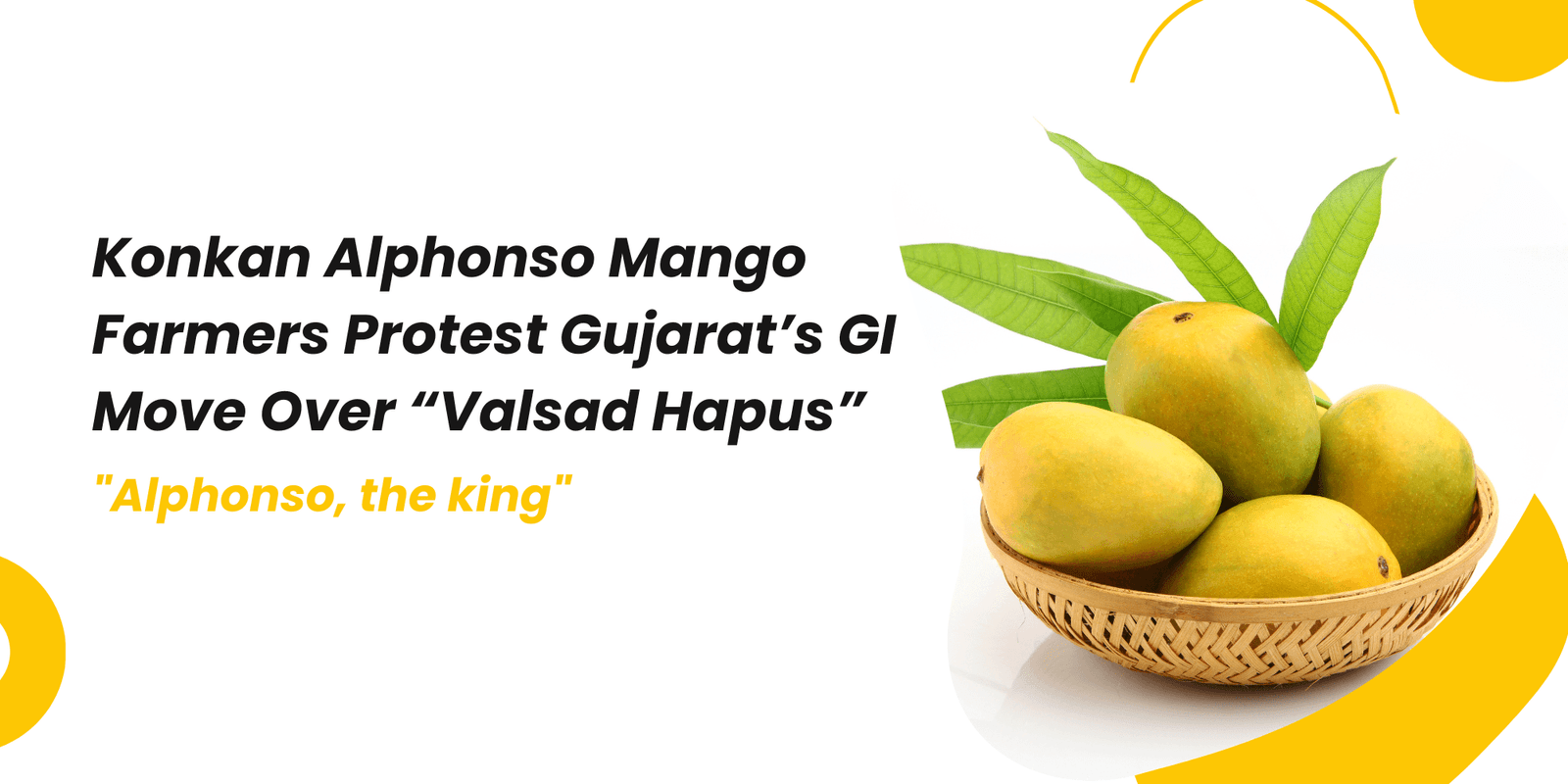
A fresh dispute has emerged around India’s most celebrated mango, the Alphonso or Hapus, as farmers from Maharashtra’s Konkan region protest Gujarat’s move to seek a Geographical Indication (GI) tag for Valsad Alphonso, locally referred to as Valsadi Hapus. Growers fear that granting a separate GI tag to Valsad Hapus would dilute the globally recognised identity, premium value, and economic security associated with Konkan Alphonso mangoes.
The issue has sparked protests, political reactions, and renewed debate about how GI protection should balance shared agricultural heritage with regional brand identity.
The Dispute: Why Konkan Farmers Are Protesting
The controversy began after Gujarat-based institutions, including Navsari Agricultural University and Gandhinagar University, applied for a GI tag for Valsad Hapus.
Konkan Alphonso growers argue that this move threatens the distinct identity of Ratnagiri and Devgad Alphonso mangoes, which already hold GI status. Farmers from Ratnagiri, Sindhudurg, and other Konkan districts have staged protests, stating that the Alphonso mango’s international reputation is closely tied to Maharashtra’s coastal belt.
Grower representatives, including groups led by farmer activist Vivek Bhide, say that allowing another region to market Alphonso mangoes under a GI label could confuse buyers and weaken the premium positioning Konkan farmers have built over decades.
Konkan’s Existing GI Tag
The Alphonso mango from Maharashtra’s Konkan region received its GI tag in 2018 from the Geographical Indications Registry of India.
This recognition officially linked the unique taste, aroma, and texture of Konkan Alphonso mangoes to the region’s:
Lateritic red soil
Coastal climate and sea breeze
Traditional cultivation and natural ripening practices
For Konkan farmers, the GI tag is not symbolic—it directly protects livelihoods by ensuring that only mangoes grown in the notified regions can be sold as GI-certified Alphonso.
Farmers’ Concerns: Livelihood and Brand Dilution
Konkan growers fear that granting a GI tag to Valsad Hapus would:
Dilute the premium image of Konkan Alphonso mangoes
Lower market prices due to brand confusion
Harm export credibility in sensitive international markets
Reduce long-term income security for thousands of small farmers
Alphonso mango farming supports a large rural economy in Ratnagiri and Sindhudurg. Farmers argue that even a small loss of brand clarity can have a serious economic impact, especially in export markets where origin authenticity plays a crucial role.
Gujarat’s Stance: Shared Heritage Argument
On the other side, Gujarat’s Bharatiya Kisan Sangh (BKS) has supported the GI application for Valsad Hapus.
According to BKS leaders in Gujarat, Alphonso mangoes have been grown across the broader western belt—including parts of Gujarat—for centuries. They argue that the mango variety predates modern state boundaries and represents a shared agricultural heritage rather than an exclusive regional product.
Supporters of the Gujarat application claim that a GI tag for Valsad Hapus would recognise local farmers’ history without necessarily undermining Konkan growers.
Political Reactions in Maharashtra
The dispute has also taken on political dimensions. Opposition parties in Maharashtra have urged the state government to intervene and protect the existing GI status of Konkan Alphonso mangoes.
Political leaders have warned that any dilution of the Alphonso brand could affect thousands of farmers and exporters, calling on the government to make formal representations to the GI authorities.
What Is a GI Tag and Why It Matters
A Geographical Indication (GI) tag certifies that a product originates from a specific location and derives its quality or reputation from that region. GI tags:
Protect product names from misuse
Support higher prices for farmers
Build trust in domestic and global markets
Preserve traditional knowledge and practices
In global trade, GI tags act as powerful branding tools. Any ambiguity around their scope can weaken consumer confidence.
The Broader Impact on Indian Agriculture
This dispute highlights a larger challenge in Indian agriculture: how to protect regional brands while acknowledging historical cultivation across regions. As Indian produce gains global visibility, clear and enforceable GI definitions become increasingly important.
Experts suggest that stronger enforcement, clearer labeling rules, and consumer education are essential to prevent confusion and conflict.
Conclusion
The protest by Konkan Alphonso mango farmers against Gujarat’s GI move for Valsad Hapus reflects deep concerns about brand dilution, farmer livelihoods, and market trust. While both regions share a long history of Alphonso cultivation, Konkan growers argue that GI protection must remain tightly defined to preserve the mango’s global reputation.
As authorities review the application, the outcome will likely set an important precedent for how India balances shared agricultural heritage with region-specific identity in GI protection.
India’s mango export industry has seen a major shift in recent seasons, driven by the rapid expansion of air cargo logistics for fresh mango shipments. For premium varieties like Alphonso mango, faster and more reliable air transport has opened new opportunities in global markets while improving quality assurance for international buyers.
This development marks an important step for India’s horticulture exports, especially for fruits with short shelf life and high quality expectations.
Why Air Logistics Matter for Alphonso Mango Exports
Alphonso mangoes are highly sensitive to time, temperature, and handling. Unlike hardier fruits, they require careful transport to preserve:
Natural aroma
Pulp texture
Ripeness balance
Shelf life
Earlier, exporters relied heavily on sea freight, which increased transit time and raised the risk of overripening or quality loss. As a result, air cargo has become the preferred mode for premium Alphonso shipments, particularly to distant markets.
Expansion of Air Cargo Capacity for Mango Exports
During the peak mango season, Indian airlines and cargo operators significantly increased their capacity for transporting mangoes abroad. A key contributor to this effort has been Air India, which carried large volumes of Indian mangoes to multiple international destinations.
By using a combination of dedicated cargo flights and passenger aircraft belly space, exporters managed to:
Reduce transit time
Maintain cold-chain integrity
Reach more destinations efficiently
This expansion allowed mangoes harvested in Ratnagiri and Devgad to reach overseas markets within days instead of weeks.
Key Export Destinations Benefiting from Air Logistics
With improved air connectivity, Alphonso mangoes reached several major markets more efficiently, including:
United States
United Kingdom
United Arab Emirates
Singapore
Japan
These destinations demand strict compliance with quality and phytosanitary standards. Faster air transport helps exporters meet these requirements while delivering fruit at optimal ripeness.
Impact on Mango Quality and Buyer Confidence
One of the biggest advantages of air logistics is consistent quality on arrival. Shorter transit times reduce temperature fluctuations and handling stress, which directly improves fruit condition.
As a result:
Importers receive mangoes with better aroma and appearance
Retail shelf life improves
Rejection rates decline
This reliability strengthens buyer confidence and encourages repeat orders, especially for GI-certified Alphonso mangoes.
Benefits for Farmers and Exporters
The expansion of air cargo logistics benefits multiple stakeholders across the supply chain.
For Farmers
Better price realization for export-grade mangoes
Reduced wastage during peak harvest
Stronger demand for quality-focused farming
For Exporters
Access to premium markets
Ability to meet tight delivery windows
Improved brand reputation abroad
Moreover, exporters can now plan shipments more accurately, aligning harvest schedules with flight availability.
Challenges and Cost Considerations
Despite its advantages, air freight remains more expensive than sea transport. Exporters must balance:
Higher freight costs
Price sensitivity in destination markets
Limited cargo space during peak travel seasons
Therefore, air logistics are mainly used for high-value Alphonso mangoes, while other varieties may still move via sea routes or mixed logistics models.
Long-Term Outlook for Mango Air Exports
Industry experts believe that air logistics will continue to play a key role in India’s mango export strategy. As demand for premium, traceable produce grows, faster delivery methods will become essential rather than optional.
In the future, improvements in:
Cold-chain infrastructure at airports
Coordination between farmers and exporters
Dedicated seasonal cargo planning
could further reduce costs and expand air-based mango exports.
What This Means for Alphonso Mango Buyers
For international buyers, expanded air logistics mean:
Fresher mangoes
More reliable supply
Better consistency in quality
For domestic consumers, strong export demand reinforces the importance of authentic sourcing and GI protection, ensuring that premium Alphonso mangoes retain their value.
Conclusion
The expansion of large-scale mango air logistics represents a major advancement for India’s fruit export industry. By enabling faster, safer, and more reliable delivery, air cargo has strengthened the global presence of Alphonso mangoes.
As logistics, compliance, and infrastructure continue to improve, Alphonso mango exports are well positioned to grow—supporting farmers, exporters, and India’s reputation as a source of premium agricultural produce.
The Alphonso mango, locally called Hapus, holds a special place in India’s agricultural heritage. However, in recent seasons, a growing dispute over the Geographical Indication (GI) tagfor “Hapus” has raised serious questions about origin, labeling, and authenticity.
This debate matters not only to farmers, but also to consumers and exporters who rely on trust and transparency when buying Alphonso mangoes.
What Is a GI Tag and Why Is It Important?
A Geographical Indication (GI) tag protects products that come from a specific region and owe their quality to that location. In agriculture, GI tags help farmers protect their reputation and earn fair prices.
In 2018, India granted the GI tag for Alphonso mangoes to Ratnagiri and Devgad in Maharashtra through the Geographical Indications Registry of India. As a result, only mangoes grown in these regions can legally be sold as Ratnagiri Alphonso or Devgad Alphonso.
This decision recognized that the true Alphonso mango gets its taste, aroma, and texture from:
Konkan’s lateritic red soil
Coastal humidity and sea breeze
Traditional farming and natural ripening
What Is the Current “Hapus” GI Dispute?
Recently, growers from regions outside the Konkan belt have requested permission to use the name “Hapus” for their mangoes. They argue that similar Alphonso-type mangoes grow in their areas.
However, Konkan farmers strongly oppose this move. They clearly state that similar does not mean identical. According to them, mangoes grown outside Ratnagiri and Devgad lack the same flavor depth, aroma, and consistency.
Therefore, expanding the use of the “Hapus” name could weaken the meaning of the GI tag and confuse buyers.
Why Konkan Farmers Are Worried
For Ratnagiri and Devgad farmers, GI protection directly affects income and survival. Authentic Alphonso mangoes sell at a premium because buyers trust their origin.
If authorities allow wider use of the “Hapus” name, farmers fear:
Mislabeling in markets and online stores
Falling prices for genuine Alphonso mangoes
Loss of export credibility
Reduced motivation to follow traditional farming methods
As a result, many farmer groups have demanded stricter enforcement of GI rules.
How This Affects Consumers
For consumers, the dispute highlights a simple truth: not every mango sold as Alphonso is genuine.
Without clear origin labels, buyers may unknowingly purchase mangoes grown outside GI regions while paying premium prices. This problem affects:
Online shoppers
Export buyers
Corporate gifting orders
Therefore, buyers should always check packaging details, origin mentions, and seller transparency before purchasing.
The Need for Better Enforcement and Awareness
Although the GI tag exists, enforcement remains uneven. Many sellers still misuse the Alphonso name because penalties are weak and awareness is low.
To solve this, experts suggest:
Clear labeling of Ratnagiri or Devgad origin
Mandatory GI references on packaging
Digital traceability using QR codes
Stronger checks in wholesale and export markets
Importantly, informed consumers play a key role in stopping misuse by choosing verified sellers.
Why This Issue Matters Beyond Alphonso Mangoes
The “Hapus” dispute reflects a larger issue in Indian agriculture. As Indian products gain global attention, origin-based branding becomes critical.
Strong GI protection:
Rewards honest farmers
Builds long-term buyer trust
Supports sustainable agriculture
On the other hand, weak protection turns premium products into ordinary commodities.
What Buyers Should Do Now
Until authorities clarify the dispute, buyers should:
Prefer sellers who clearly mention Ratnagiri or Devgad
Look for GI references or traceability details
Avoid vague terms like “Alphonso type” or “Hapus variety”
By doing so, buyers help protect both quality and farmer livelihoods.
Conclusion
The GI tag dispute around the “Hapus” mango shows why origin matters more than ever. Ratnagiri and Devgad Alphonso mangoes earned their reputation through geography, climate, and generations of farming knowledge.
Protecting this identity ensures fairness for farmers and confidence for consumers. In a global market, authenticity is not optional—it is essential.
India’s fruit-based wine industry is witnessing a notable transformation, with Alphonso mango wine emerging as one of the most talked-about products in international markets. Once considered a niche, fruit wines made from Indian-origin fruits such as Alphonso mango, jamun, chikoo, and pineapple are now gaining shelf space in global retail and hospitality channels.
This growing demand reflects changing consumer preferences worldwide, where buyers are increasingly seeking unique flavors, natural ingredients, and region-specific products rather than conventional grape-only wines.
Alphonso Mango: From Fresh Fruit to Premium Wine Ingredient
Alphonso mango has long been prized for its aroma, rich pulp, and balanced sweetness. These same characteristics make it particularly suitable for wine fermentation. Unlike many fruits, Alphonso offers a naturally high sugar content, smooth pulp texture, and a distinctive flavor profile that translates well into wine.
Producers report that Alphonso mango wine delivers:
A naturally fruity aroma without artificial flavoring
Balanced sweetness and acidity
A smooth mouthfeel, appealing to new wine drinkers
As a result, Alphonso mango wine is increasingly positioned as a premium fruit wine, rather than a novelty product.
Rising Global Demand for Indian Fruit Wines
Recent trade data and industry reports indicate that exports of Indian fruit wines have grown significantly year-on-year, with shipments doubling in some international markets. Alphonso mango wine has emerged as a key contributor to this growth.
Key export destinations include:
United Kingdom
European Union countries
Southeast Asia
Select Middle Eastern markets (where permitted by regulations)
In these markets, Indian fruit wines are often promoted as exotic, craft-style beverages with a strong origin story, appealing to consumers looking for alternatives to traditional wines.
Why International Markets Are Embracing Alphonso Mango Wine
Several factors are driving global interest in Alphonso mango wine:
1. Demand for Unique and Authentic Flavors
International consumers are increasingly drawn to products that offer a sense of place. Alphonso mango wine benefits from its association with India’s Konkan region, where the fruit’s reputation is already well established.
2. Lower Alcohol, Wider Appeal
Fruit wines generally have a lower alcohol content than traditional grape wines, making them attractive to casual drinkers and younger consumers exploring wine for the first time.
3. Growth of Craft and Boutique Wine Segments
Much like craft beer, the global wine market is seeing growth in small-batch and experimental wines. Alphonso mango wine fits well into this segment, particularly when marketed as a limited seasonal product.
Impact on Mango Growers and the Processing Industry
The rise of Alphonso mango wine is creating new value streams for mango growers and processors. Fruits that may not meet strict fresh-export grade standards—but are still high in pulp quality—can be diverted to wine production.
This has multiple benefits:
Reduced wastage during peak harvest
Additional income opportunities for farmers
Better utilization of Alphonso mango pulp
For processors, mango wine represents a way to extend the commercial life of Alphonso beyond the short fresh-fruit season.
Quality, Compliance, and Export Standards
As demand grows, compliance has become a critical focus area. Export-oriented fruit wine producers are aligning with:
Food safety and labeling standards of importing countries
Alcohol regulations and certification requirements
Traceability of fruit sourcing
Alphonso mango wine producers increasingly highlight the origin of mangoes, processing methods, and batch information to build trust with overseas buyers.
Challenges Ahead
Despite strong momentum, the segment faces challenges:
Limited availability of Alphonso mangoes
Seasonal dependence on raw material
Regulatory complexity in alcohol exports
Need for consistent quality across batches
Industry experts note that scaling fruit wine exports will require better coordination between farmers, processors, and logistics providers.
Outlook: Alphonso Mango Wine as a Global Indian Signature
The success of Alphonso mango wine signals a broader shift in how Indian agricultural products are perceived globally. No longer limited to raw exports, India is increasingly exporting value-added, origin-driven products.
As branding, quality control, and export infrastructure improve, Alphonso mango wine has the potential to become a signature Indian fruit wine—much like how certain grape wines are associated with specific regions worldwide.
Conclusion
The growing global demand for Indian fruit wines marks an important milestone for India’s agri-processing sector. Among these, Alphonso mango wine stands out for its flavor, authenticity, and premium appeal.
By combining India’s most iconic mango with modern fermentation and export practices, producers are opening new markets and creating sustainable opportunities for growers. If managed carefully, Alphonso mango wine could play a lasting role in showcasing India’s agricultural excellence on the global stage.
Alphonso mangoes are among the most expensive fruits in India because of their limited growing regions, short season, and exceptional quality. They are cultivated mainly in Ratnagiri, Devgad, and Sindhudurg on Maharashtra’s Konkan coast, where the red lateritic soil and coastal climate give them their distinctive sweetness, aroma, and creamy texture.
Alphonso trees produce fewer fruits than most varieties, and the harvest period lasts only from March to June. The demand from both domestic and export markets far exceeds supply, which drives up the price. Each fruit is handpicked, naturally ripened, and carefully graded, ensuring that every Alphonso mango is a premium product.
What Is So Special About Alphonso Mango?
The Alphonso, also known as Hapus, is celebrated for its rich aroma, saffron-yellow color, and buttery, non-fibrous pulp. The flavor is perfectly balanced—neither too sweet nor too tangy. Its unique taste profile, smooth texture, and natural fragrance make it the most sought-after mango in India and abroad.
Which State Is Famous for Alphonso Mango?
Maharashtra is the most famous state for Alphonso mango cultivation, especially the Ratnagiri and Devgad districts. These regions hold the official Geographical Indication (GI) tag for Alphonso mangoes, guaranteeing their origin and authenticity. Only mangoes grown within these areas can legally be sold as Ratnagiri Hapus or Devgad Alphonso.
Which Alphonso Is Best: Ratnagiri or Devgad?
Both Ratnagiri and Devgad Alphonso mangoes are outstanding, but they have subtle differences:
Feature
Ratnagiri Alphonso
Devgad Alphonso
Color
Golden yellow, thin skin
Deep saffron tone, firm skin
Texture
Softer, creamy pulp
Firmer, slightly fibrous
Aroma
Deep and strong
Light and fruity
Taste
Rich, balanced sweetness
Slightly tangier finish
Ratnagiri Alphonso is known for its delicate texture and balanced sweetness, while Devgad Alphonso offers a firmer bite and stronger color. Both are premium, GI-certified fruits.
Why Was Alphonso Mango Banned in the US?
For many years, Indian Alphonso mangoes were banned in the United States due to phytosanitary regulations related to fruit flies and other pests. Exports resumed after India adopted USDA and APHIS-approved irradiation treatment for all exported mangoes. Today, authentic Ratnagiri Alphonso mangoes are exported safely to the US, meeting all international quality standards.
Which Is Better: Kesar or Alphonso?
Kesar and Alphonso are both highly regarded, but they cater to different preferences.
Feature
Alphonso
Kesar
Origin
Maharashtra (Ratnagiri, Devgad)
Gujarat (Junagadh, Talala)
Taste
Creamy, rich, aromatic
Juicy, honey-sweet
Texture
Smooth, non-fibrous
Slightly fibrous
Use
Gifting, export, desserts
Juices, pulp, daily consumption
Kesar mangoes are known for their sweetness and juiciness, while Alphonso offers a more complex, aromatic flavor. Alphonso remains India’s No. 1 premium mango because of its depth of flavor and export reputation.
Which Is India’s No. 1 Mango?
The Ratnagiri Alphonso mango holds the title of India’s No. 1 mango. Its GI certification, superior quality, and high demand make it the most respected variety in the country and across global markets.
Which Country Is the Largest Producer of Alphonso Mango?
India is the largest producer of Alphonso mangoes. The fruit is grown mainly in Maharashtra’s Konkan belt, with limited cultivation in Karnataka and Gujarat. Most exports go to the US, UK, UAE, Singapore, and Japan.
How to Identify Original Alphonso Mango
With many counterfeit varieties in the market, it is important to recognize real Alphonso mangoes:
Aroma – Genuine Alphonso mangoes have a strong natural fragrance even before ripening.
Skin – Naturally ripened fruits show a golden yellow color with green patches.
Pulp – The texture is smooth and fiberless.
Certification – Look for a GI tag or QR code from an authorized farm or brand such as Ratnagiri Hapus Store.
Which Mango Is the Most Expensive in India?
The Alphonso mango is the most expensive mainstream variety in India, typically priced between ₹1,000 and ₹3,000 per dozen for GI-certified fruits. However, rare types such as the Japanese Miyazaki mango, sometimes sold in India, can cost up to ₹2–3 lakh per kilogram due to their unique red color and limited availability.
What Is the 2.5 Lakh or 3 Lakh Mango?
That refers to the Japanese Miyazaki mango, often called the “Egg of the Sun.” It has a high sugar content and glowing ruby-red skin. These mangoes are extremely rare and are usually grown under special greenhouse conditions in Japan and a few experimental farms in India.
Can Miyazaki Mangoes Be Grown at Home?
Miyazaki mangoes can technically be grown in India, but they require warm, humid weather and controlled conditions similar to Japan’s greenhouses. While some Indian farmers have succeeded, it remains a challenge for home growers.
Which Mango Is Sweetest: Kesar or Alphonso?
Kesar mangoes are sweeter and juicier, while Alphonso mangoes offer a richer, creamier sweetness with more aroma. If you prefer syrupy sweetness, Kesar is ideal. If you prefer depth and balance, Alphonso is the superior choice.
Globally, Alphonso is considered one of the sweetest and most flavorful mangoes in the world.
Why Is Kesar Mango So Expensive?
Kesar mangoes are grown in limited areas of Gujarat and are highly valued for their bright color, strong aroma, and natural sweetness. The combination of small production volumes and high demand, especially in export markets, makes them relatively expensive.
Conclusion
From Ratnagiri’s coastal slopes to Gujarat’s fertile plains, India’s mango heritage is unmatched. Among all varieties, Ratnagiri Alphonso continues to reign supreme for its authenticity, flavor, and quality.
At Ratnagiri Hapus Store, every mango is sourced directly from GI-certified farms, naturally ripened, and delivered fresh to your doorstep.
Experience the original taste of the Konkan coast — real, rich, and unforgettable.
Alphonso mangoes (locally called Hapus) are primarily grown in Ratnagiri, Devgad, Sindhudurg, and Raigad districts of Maharashtra’s Konkan region.
The region’s laterite soil, high humidity, and salty sea breeze create the perfect microclimate for producing mangoes with a distinct aroma, sweetness, and saffron-like color. No other place can quite replicate this natural magic.
Can Alphonso Mango Be Grown Elsewhere in India?
Yes, Alphonso trees can technically grow in other regions — but the taste, aroma, and texture won’t be identical to Ratnagiri or Devgad Hapus. Let’s look at a few states where people have tried cultivating Alphonso mango:
1. Uttar Pradesh
Can Alphonso mango be grown in Uttar Pradesh?
UP’s Gangetic plains support mangoes like Dasheri and Langra, but Alphonso doesn’t thrive well here. The soil and temperature fluctuations affect the fruit’s sweetness and color.
2. Punjab
Can Alphonso mango be grown in Punjab?
Punjab’s hot summers and dry winds make it unsuitable for Alphonso. While trees may survive, they won’t bear high-quality fruit. Alphonso needs coastal humidity, not dry plains.
3. Haryana
Can Alphonso mango be grown in Haryana?
Haryana has similar conditions to Punjab — not ideal for premium Alphonso production. Other local varieties do much better there.
4. Bihar
Can Alphonso mango be grown in Bihar?
Bihar’s climate supports varieties like Malda and Fazli. Alphonso can grow, but it loses its signature aroma and flavor, making it commercially unviable.
5. South India
Interestingly, parts of Karnataka and Tamil Nadu have shown some success. Karnataka’s Dharwad and Belgaum regions, and certain parts near Chennai, have experimented with Alphonso. However, even there, the fruit remains a different variant — milder in flavor compared to the Konkan original.
Can Alphonso Mango Be Grown from Seed?
You can grow Alphonso mango from seed, but it’s not the best idea if you want the real Hapus. Seed-grown trees often lose genetic purity. For best results, farmers use grafted Alphonso saplings sourced from Ratnagiri or Devgad nurseries.
How to Grow Alphonso Mango Tree
Use well-drained laterite or red soil.
Choose a sunny location with good air circulation.
Water regularly but avoid waterlogging.
Prune yearly to maintain tree shape.
Expect fruit after 3–5 years in grafted trees.
If you’re planting from seed, remove the hard shell and plant the kernel in moist soil. It will sprout in about three weeks.
How to Identify a True Alphonso Mango
Here’s how to spot the real deal:
Bright golden-yellow color with a light red blush
Strong sweet aroma even before cutting
Non-fibrous, saffron-orange pulp
Smooth skin and firm feel
GI-tagged Ratnagiri or Devgad Alphonso mangoes are your safest choice for authenticity.
How to Eat, Cut, and Store Alphonso Mango
To eat: Peel and slice, or enjoy by squeezing and sucking out the pulp — a fun Konkan-style tradition!
To cut: Slice both cheeks, score them into cubes, and flip the skin.
Storage tip: Don’t refrigerate raw Alphonso mangoes. Once ripe, store them in the fridge to keep fresh for 2–3 days.
How to Order Alphonso Mango Online
You can order fresh GI-certified Alphonso mangoes directly from authentic sellers like Ratnagiri Hapus Store. Always look for farm-fresh, naturally ripened mangoes during the March–June season.
What Alphonso Mango Is Called in Different Languages
Hindi: Hapus आम
Kannada: Appus Mavina Hannu
Telugu: Appus Mamidi
Tamil: Appus Maanga
Popular Alphonso Mango Products
Alphonso Mango Pulp: Smooth, rich pulp used in desserts and beverages.
Alphonso Mango Lassi: A sweet, creamy drink made from mango pulp and yogurt.
Alphonso Mango Sorbet: A dairy-free frozen dessert bursting with real mango flavor.
The Taste of Royalty
So how does Alphonso mango taste? It’s rich, creamy, and buttery, with a delicate balance of sweetness and tang. The flavor feels like sunshine on your tongue — no wonder it’s called the King of Mangoes.
Final Word: The True Home of Alphonso Mango
While Alphonso mango can technically be grown in other parts of India, only the Konkan coast — Ratnagiri, Devgad, Sindhudurg, and Raigad — produces the authentic, GI-certified Hapus mango.
The unique combination of sea breeze, laterite soil, and tropical humidity gives it that unmatched taste, aroma, and golden glow the world loves.
So wherever you are, if you want the real thing — order your Ratnagiri Hapus Alphonso fresh from the source!